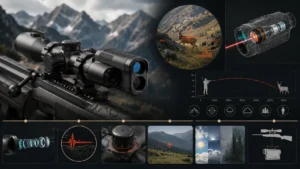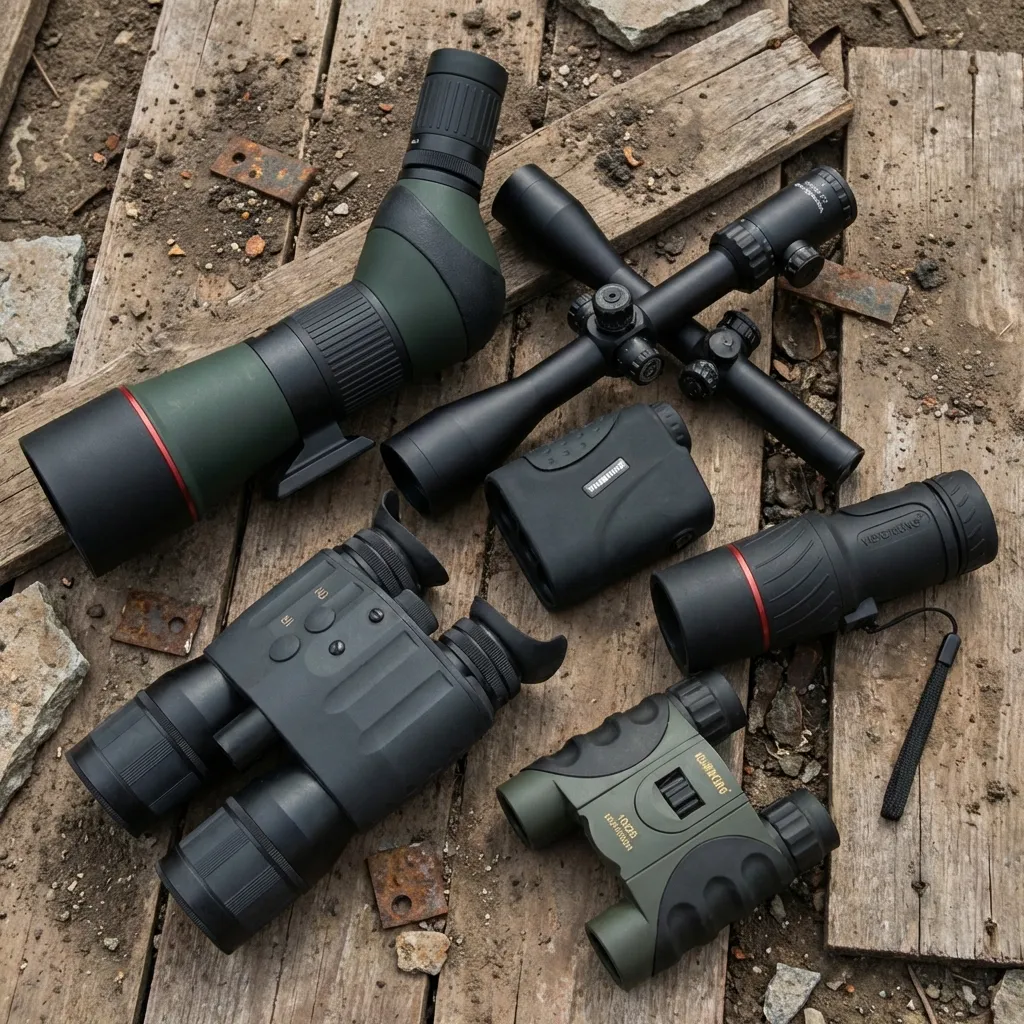
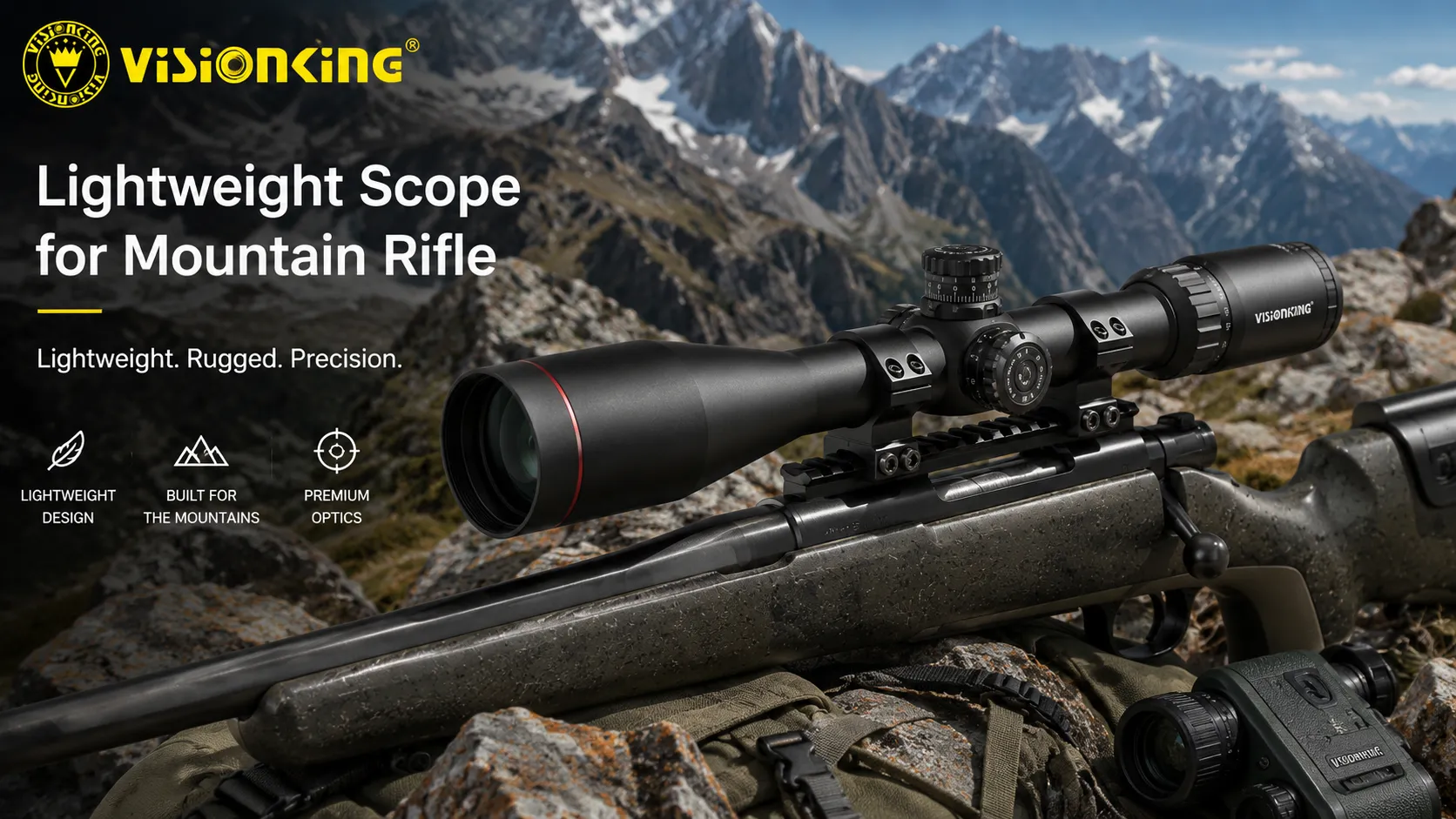
The search for a lightweight scope for mountain rifle applications isn’t about finding the lightest optic—it’s about finding the lightest optic that won’t fail. We’ve seen too many custom rifle OEMs chase a sub-10-ounce number, only to watch tracking fall apart under magnum recoil or thermal drift erase a zero during the first cold-weather glassing session.
Our engineering team treats the 10-to-16-ounce window as the hard technical target. Drop below 10 ounces and you’re almost certainly sacrificing either erector tension, turret precision, or both. Stay above 16 ounces and you’re eating into the weight budget of a system that already fights every ounce.
This guide walks through the specification details, procurement checkpoints, and supplier-evaluation logic we use when we help OEMs, gunsmiths, and outfitter fleet buyers make a defensible optic selection.
Defining the Optimal Lightweight Scope for Mountain Rifle Systems
Decision rule: An optimal lightweight scope for mountain rifle setups must weigh between 10 and 16 ounces, striking a critical balance between physical mass reduction and structural integrity required to withstand heavy recoil.
The Critical Ounce-to-Performance Ratio for Backcountry Rigidity
Ultra-lightweight rifles—often under 6 pounds bare—generate sharp, high-velocity recoil impulses that punish internal optical components differently than a 10-pound bench gun. When scope mass drops too low, the erector tube’s inertial resistance decreases, and even a perfectly machined turret assembly can skip under rapid recoil cycling. We prioritize designs that use dual-spring tensioning rather than single-spring layouts, because the second spring acts as a mechanical damper. When you spec a scope under 12 ounces, ask the supplier for detailed box-test data or a tracking consistency log; we don’t rely on published marketing weights alone.
Defining the Industry Weight Classes: Ultralight, Standard, and Precision Crossover
For procurement purposes, we break lightweight scopes into three rough categories:
- Ultralight (under 12 oz): Often 1-inch tubes, fixed parallax, and simple reticles. Suitable for short-to-moderate ranges where the system weight under 7 pounds ready-to-hunt is the absolute priority. Maven RS.2 and select Leupold fixed-power models fit here.
- Standard lightweight (12–16 oz): The sweet spot for most mountain rifle builds. This class includes the Swarovski Z5 3.5-18×44 (15.9 oz), Leupold VX-3HD 3.5-10×40 (12.6 oz), and similar designs with 1-inch tubes but enough erector mass to hold zero under .300 Win Mag recoil.
- Precision crossover (16–20 oz): Typically 30mm tubes with extended elevation travel and illuminated reticles. These support long-range dialing but push the system weight slightly higher. Vortex Razor HD LHT 3-15×42 (19.1 oz) is a prime example.
Outfitter fleet buyers should document which weight class each rifle package targets before approving a spec, because swapping from a 13-ounce Leupold to a 19-ounce Vortex adds nearly half a pound to the rifle system.
Optical Engineering Specifications for Harsh Alpine Environments
Engineering takeaway: Sourcing managers should prioritize 36mm to 44mm objective lenses and 30mm main tubes to maximize structural integrity and internal adjustment travel without adding excessive front-end weight.
Objective Lens Diameter and Low-Light Twilight Transmission
Objective size directly affects twilight performance and rifle balance. A 50mm or larger objective forces higher mounting rings, which breaks cheek weld on the slender combs typical of mountain rifle stocks. That raises the shooter’s head, induces parallax error, and slows target acquisition during the legal shooting window’s last minutes. We spec 40mm to 44mm objectives in most builds because they pair well with low-profile rings and still deliver exit pupils above 4mm at typical low-light magnifications. Glass quality matters more than a few millimeters of aperture: a premium 40mm lens with high-transmission coatings will outperform a mediocre 50mm lens in twilight conditions.
Main Tube Construction: 1-Inch vs. 30mm Structural Trade-offs
The tube diameter decision is a structural engineering problem, not an aesthetic one. Here’s how they compare for mountain rifle OEMs:
| Parameter | 1-Inch Tube | 30mm Tube |
|---|---|---|
| Typical weight | 12–16 oz | 16–22 oz |
| Elevation adjustment range | 40–60 MOA | 70–100+ MOA |
| Cross-sectional rigidity | Adequate for standard cartridges | Superior under heavy recoil and rough transport |
| Buyer should verify | Actual MOA travel at max elevation; not all 1-inch models deliver the same range | Turret tracking consistency across full travel; larger tube doesn’t guarantee better tracking |
Note: Typical numbers based on manufacturer datasheets; always verify current specs with the supplier for the specific model and magnification range.
A 30mm tube often adds 2 to 4 ounces over a 1-inch counterpart but brings the internal volume needed for reliable long-range dialing. For extended-range mountain systems that need to dial 10-15 MOA reliably, we strongly prefer 30mm tubes. For sub-400-yard timber rifles, a 1-inch tube with 50 MOA of travel is more than adequate and saves critical ounces.
Focal Plane and Reticle Engineering for High-Angle Angled Shots
Decision rule: Second focal plane (SFP) reticles remain the commercial standard for ultralight mountain rifles due to their weight-saving design and consistent visibility at low magnification. However, First Focal Plane (FFP) is preferred for systems expecting rapid, dial-free windage holds at long range.
Second Focal Plane (SFP) for Backcountry Simplicity and Weight Savings
SFP reticles live behind the magnification lens, so the reticle size stays constant to the eye regardless of magnification setting. This matters in dark timber at dawn: a thin FFP reticle at 3x can disappear against a shadowed animal, while an SFP reticle remains bold and visible. From an engineering standpoint, SFP designs require fewer glass elements and a simpler erector assembly, which contributes directly to the 2–4 ounce weight advantage we mentioned earlier. Most Swarovski Z5 and Leupold VX-3HD models are SFP for exactly this reason. When we spec SFP, we pair it with a custom turret dial or engraved elevation cap matched to the client’s specific load, so the shooter doesn’t need to use reticle subtensions for holdover.
First Focal Plane (FFP) for Dynamic Elevation and Windage Holds
FFP reticles scale with magnification, so the subtensions remain accurate at any power. For a mountain rifle that regularly takes 500- to 700-yard cross-canyon shots, this eliminates the calculation error of SFP subtensions at intermediate magnifications. The trade-off is weight: the additional lens cell adds mass, and the erector system must be precisely aligned to prevent reticle cant. In our experience, procurement teams should offer FFP as a defined upgrade path for long-range precision packages, not as the default. The Vortex Razor HD LHT and a few high-end SFP-to-FFP crossover models fit here. Before committing to an FFP fleet spec, have a gunsmith check that the reticle remains visible against dark backgrounds at the lowest magnification under dawn/dusk light; some illuminated FFP reticles solve this, but they add battery weight and complexity.
Tracking Reliability and Zero Retention Under Extreme Thermal Shifts
What to verify: Sourcing agents must verify that lightweight scopes utilize dual-spring erector tensioning systems and are fully purged with Argon or Nitrogen to prevent optical failure when transitioning from warm transport to sub-freezing ridges.
Internal Erector Systems and the Physics of Turret Drift
The erector tube is the heart of any variable-power scope, and lightweight designs put it under unique stress. When you dial a turret, you’re compressing a spring stack that pushes the erector tube against the turret spindle. In cheap scopes, a single spring can develop uneven tension under recoil, producing lateral shift. Over repeated recoil cycles, that shift manifests as a wandering zero. We check for dual-spring systems or opposing leaf-spring designs that center the erector more firmly. For OEM batch verification, run a simple box test: dial 10 MOA up, right, down, left, and back to zero. If the point of impact doesn’t return to within 0.1 MIL, the tensioning system is suspect. This is especially critical for lightweight scopes because the reduced housing mass transfers recoil energy faster into the erector.
Purging Standards: Argon vs. Nitrogen for Extreme Altitude Shifts
When a rifle moves from a heated truck to a 20°F ridgeline, the scope’s internal air contracts. Any moisture trapped inside will condense on lens surfaces. Both nitrogen and argon purging displace that moisture, but argon molecules are larger and less likely to leak through O-ring seals over time. For mountain rifle scopes that will see repeated 4,000- to 10,000-foot elevation changes, argon purging is our preferred spec. The key procurement check: ask whether the manufacturer tests purged integrity at altitude or only at sea-level pressure. A scope that holds purge at 1,000 feet may fog when you glass at 9,000 feet because the pressure differential stresses seals differently. We’ve seen this failure on several budget lightweight optics, and it’s a warranty headache no outfitter wants to manage.
Premium Lightweight Scope Models Analyzed for Custom Rifle OEMs
Best-fit scenario: For ultra-premium custom builds where weight is the primary metric, the Swarovski Z5 (1-inch tube, 15.9 oz with 44mm objective) leads in clarity. Meanwhile, the Leupold VX-3HD (1-inch tube, 12-16 oz) offers the most durable, cost-effective baseline fleet configuration.
Swarovski Z5 Series: Unrivaled Glass Clarity and Minimal Mass
The Swarovski Z5 3.5-18×44 sits at the top of the lightweight mountain optic hierarchy for glass quality. At 15.9 ounces with a 1-inch tube, it delivers 93% light transmission and a 44mm objective that balances low-light performance without pushing the rifle’s center of gravity forward. For OEMs building sub-7-pound ready-to-hunt systems, the Z5’s weight and glass combination is hard to beat. The main procurement consideration is cost: it’s a premium optic, and outfitter fleet budgets rarely absorb a dozen Z5s per season. We’ve helped custom rifle builders spec this scope as the flagship optic on their top-tier package, with a Leupold or Maven filling the mid-tier slot.
Leupold VX-3HD & VX-5HD: The Rugged Backcountry Gold Standards
Leupold VX-3HD models (like the 3.5-10×40 at 12.6 oz) remain the most commonly spec’d lightweight scopes in our OEM partnerships because they balance weight, tracking reliability, and cost. Leupold’s dual-spring erector system resists drift well, and the company’s lifetime warranty is genuinely no-fault. For fleet buyers, that warranty means a broken scope from a horse fall gets replaced without a cost analysis. The VX-5HD line steps up to a 30mm tube and adds a firedot reticle option for low-light visibility, but it pushes weight to around 18-19 ounces. When we evaluate Leupolds, we always confirm the specific model’s eye relief range—some short-action cartridges in lightweight stocks generate enough recoil to cause scope-bite if eye relief drops below 3.5 inches at maximum magnification.
Vortex Razor HD LHT & Maven RS.2: Modern Lightweight Adjustability
The Vortex Razor HD LHT 3-15×42 (19.1 oz) is a 30mm FFP scope with locking turrets and an illuminated reticle, making it the top pick for mountain rifles that double as long-range precision platforms. The locking turret prevents accidental dial movement during brush travel, and the elevation turret tracks consistently enough for dialing out to 700+ yards. The Maven RS.2 (2-10×38, 12.5 oz) takes the opposite approach: a 1-inch SFP scope with capped turrets and a streamlined profile that snags less on pack straps and scabbards. Gunsmiths building classic mountain rifles on lightweight Mauser or Model 70 actions often prefer the Maven’s aesthetics and simplicity. Both manufacturers back their products with solid warranties, but we recommend verifying lead times before building a catalog around either model, as batch availability can fluctuate.
Mounting Systems: Eliminating Flex on Ultralight Receivers
What to verify: To preserve the weight-saving advantages of a lightweight scope for mountain rifle systems, specify direct-to-receiver integrated rings (like Talley Lightweight) or high-grade 7075-T6 aluminum rings (like Warne Mountain Tech) to minimize interface failure points.
Integrated Ringmounts vs. Tactical Picatinny Rails
In a weight-sensitive mountain rifle build, a full-length steel Picatinny rail adds 3 to 5 ounces of dead weight above the receiver. Worse, it introduces a second joint (rail-to-receiver plus ring-to-rail) that can flex under recoil. For sub-7-pound systems, we spec mounting rings that bolt directly to the receiver, like the Talley Lightweight one-piece design. These integrate the ring and base into a single 7075-T6 aluminum unit, saving weight and removing a potential loosening point. The trade-off is that direct mounts are action-specific, so an OEM building on a variety of actions must stock multiple SKUs. If the rifle will frequently swap optics or needs extreme long-range adjustment, a lightweight 6061-T6 aluminum Picatinny rail with low-profile rings is the better compromise.
Sourcing Lightweight Rings: Warne Mountain Tech and Talley All-In-Ones
Here’s how common lightweight ring materials stack up for mountain rifle builds:
| Material | Weight per pair (approx.) | Strength advantage | Buyer should verify |
|---|---|---|---|
| 7075-T6 Aluminum | 2.5–3.2 oz | High strength-to-weight; resists galling on titanium receivers | Torque specs usually 15-18 in-lbs on ring caps |
| Integrated Zinc/Aluminum Alloy | 2.8–3.5 oz | Cast one-piece designs eliminate joint flex | Not suitable for receivers with non-standard contour; check fit |
| Steel | 4.5–6.0 oz | Maximum rigidity | Risk of stripped threads on aluminum receivers at high torque |
Weight ranges are approximate; actual weight depends on ring height and manufacturer. Always confirm with the ring supplier.
On assembly lines, we mandate torque wrenches with verified calibration. Stripping a titanium or aluminum receiver thread by over-torquing a steel ring screw is an expensive, non-warranty repair. Standard torque: 15-18 in-lbs on ring caps, 25-30 in-lbs on base screws for most lightweight aluminum components. For integrated Talley rings, follow the manufacturer’s spec precisely—many require a specific torque sequence to avoid uneven clamping pressure.
B2B Procurement Decision Matrix: Weight, Durability, and Cost Trade-offs
Decision rule: Sourcing agents must evaluate optics vendors using a balanced matrix of mechanical reliability, physical weight, and warranty responsiveness to ensure long-term profitability and minimize post-sale service overhead.
Performance Tier Allocation by Client Use Case
We’ve found it useful to segment optic choices by the end-user profile, not just by price. A mountain outfitter putting a rifle on a horse every day has different needs than a custom gunsmith building a single lightweight sheep rifle. Here’s how we help procurement teams tier their selections:
- Guide/Outfitter Fleet: Prioritize warranty responsiveness and field toughness over gram-counting. Leupold VX-3HD or Vortex Razor HD LHT with locking turrets. Weight under 19 ounces is acceptable; zero retention and no-fault warranty matter more.
- Premium Custom One-Off Build: Swarovski Z5 for glass clarity, or a Maven RS.2 for minimalist aesthetics. Client tolerance for a slightly heavier optic is low, so stick to the 12-16 ounce window.
- Long-Range Mountain Crossover: Vortex Razor HD LHT or Leupold VX-5HD with FFP reticle. Buyers here need dialable elevation and windage holds; 30mm tube is essential. Accept 18-20 ounce weight.
Buyer warning: Cheap optics are the single biggest driver of customer returns in the custom rifle space. A budget scope that loses zero or fogs internally generates warranty claims that erode margin faster than the original cost savings. When evaluating a supplier, ask for batch-specific tracking test results, not just a brochure claim.
Lifecycle Support: Manufacturer Warranties and Fleet Serviceability
For commercial buyers, a warranty isn’t just a consumer perk—it’s a risk-management tool. Look for “no-fault, lifetime, transferable” language. Leupold, Vortex, and Maven all offer this in practice, though the fine print varies. Swarovski’s warranty is also comprehensive but may have regional coverage limitations. Before finalizing a fleet order, ask the supplier:
- Is the warranty considered valid for commercial/outfitter use?
- What is the typical turnaround time for service?
- Is tracking accuracy guaranteed for the lifetime of the scope, or only the initial warranty period?
Also check whether the manufacturer provides replacement turret caps or custom engraving services, which can be a value-add for a custom rifle package. Many OEMs overlook this, but a custom turret dial engraved with the client’s specific load data is a high-perceived-value feature that costs little to implement at the supplier level.
Sourcing Premium Backcountry Optics: Commercial Procurement and OEM Partnerships
Engineering takeaway: Partnering with a vetted optics supplier or distributor requires identifying volume-compatible models that align seamlessly with your custom rifle receiver specifications and weight budgets.
Before you contact a supplier, assemble a clear specification sheet: receiver material (titanium, aluminum, steel), action footprint, desired overall system weight limit, and typical cartridge chamberings. This prevents the back-and-forth of swapping scope models mid-build because someone discovered the eye relief didn’t work with a 7mm Rem Mag in a 5.5-pound stock. We’ve seen production delays of weeks because an OEM spec’d a 3.5-inch eye relief scope on a .300 Win Mag platform and clients started returning bruised faces.
For volume procurement, ask about custom reticle etching options, bundled mounting ring packages, and white-label or co-branded scope caps. Even a small custom run of 50 scopes can elevate a rifle brand’s market perception. Our team can help you compare the lightweight rifle scope options that meet your weight and mechanical criteria, and we can discuss best rifle scopes for mountain hunting that fit specific fleet or custom build requirements. If you need to choose a custom scope for weight savings, we can walk through the reticle and turret personalization options.
Most importantly, document your receiver dimensions and action materials before the first call. Steel, titanium, and aluminum receivers each have different optimal ring materials and torque limits, and mismatching those can create a failure point that no scope—no matter how good—can overcome.
Frequently Asked Questions
What is the ideal weight limit for a lightweight scope for mountain rifle setups?
For true backcountry and mountain hunting applications, the optic should not exceed 16 ounces, with 10 to 14 ounces being the ideal target to keep the complete rifle system (with optics and mounts) under 7.5 pounds.
Why do many lightweight scopes utilize second focal plane (SFP) reticles?
SFP construction requires fewer internal glass elements and mechanical parts than FFP systems, making them naturally lighter. SFP reticles also remain thick and highly visible at low magnification, which is crucial in low-light, high-contrast timber conditions.
Does a 30mm tube offer clear structural advantages over a 1-inch tube on ultralight rigs?
Yes. A 30mm tube provides greater cross-sectional rigidity and significantly more internal windage and elevation adjustment travel, though it typically adds 2 to 4 ounces of weight compared to an equivalent 1-inch design.
Are lightweight riflescopes structurally less durable under heavy recoil?
Not inherently. Premium lightweight optics achieve weight savings by using high-grade aircraft aluminum housings and simpler optical configurations rather than thin, fragile parts. However, low-end lightweight scopes can suffer from mechanical failure inside the erector housing if subjected to magnum-caliber recoil.
How does altitude and extreme cold affect lightweight scope tracking?
Extreme cold can cause inferior internal lubricants to thicken, leading to sticky turrets and erratic tracking. Additionally, rapid temperature drops can induce thermal contraction in internal metal parts, causing zero drift if the scope has not been engineered with dual-spring tension systems. That’s why we emphasize verifying a lightweight scope for mountain rifle use has been purged and tested for altitude extremes.