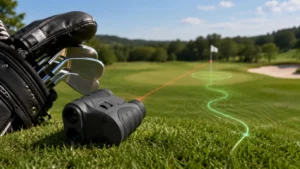
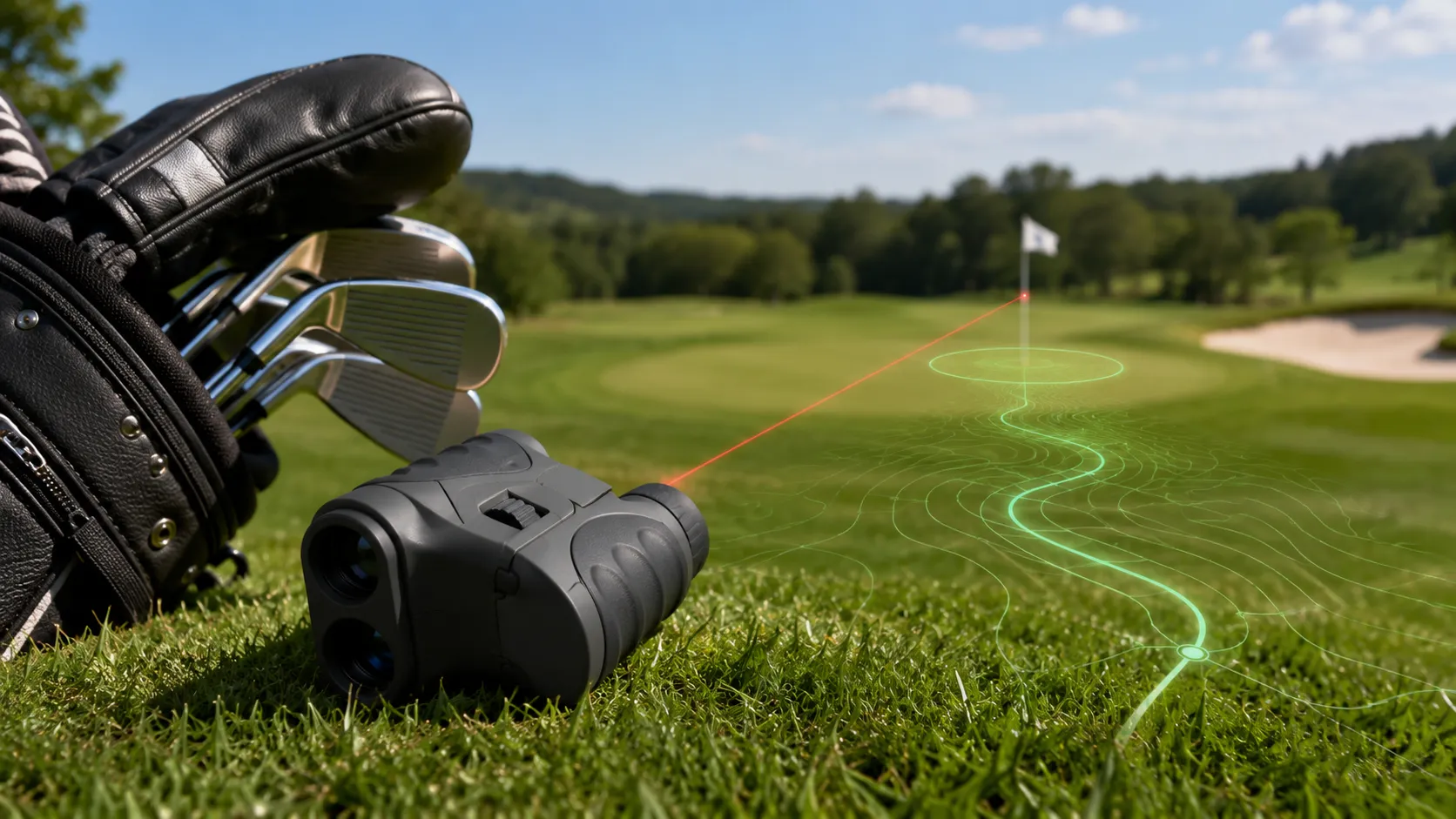
Most golfers eventually hit the same wall: the laser gives you the flag, but the GPS shows the hidden creek. You’re left guessing on blind shots and punishing approach angles. A laser rangefinder with GPS finally puts both tools into one device, so you never have to choose between precision and awareness again. This guide walks through what to look for in a hybrid model, how the features affect your round, and which trade-offs matter most for your game.
We’ve learned that choosing the right hybrid isn’t just about picking the most expensive screen. It’s about how you play, where you play, and whether you need tournament-legal slope toggling at a glance. By the end, you’ll know exactly which features will actually help you score better.
What is a Hybrid Golf Rangefinder?
A hybrid golf rangefinder is a single device that combines the exact yardage of a laser with the overhead course view of GPS. When you look through the lens, you get pin-locked distance to the flag. On its external display, you see front/middle/back distances, hazard shapes, and green layouts—all without pulling out your phone or carrying a separate GPS unit.
This isn’t just two gadgets stacked together. The real work happens when the two data streams support each other. The laser tells you it’s 163 yards to the pin, but the GPS shows the green is 18 yards deep and slopes hard from back to front. That kind of information changes club selection immediately. For years, serious players carried a laser and a watch-style GPS, but hybrids eliminate the fumbling and let you read everything from one hand. The shift is especially welcome on unfamiliar courses where you don’t know the blind traps, hidden water, or green complexes by memory.
More practically, a hybrid device also cleans up your cart or bag. Instead of clipping two devices to the roof pillar, you mount one and glance when needed. That simplicity alone has made hybrids a popular upgrade for mid-handicappers and competitive amateurs who want all available data without the mental clutter.
Laser vs. GPS vs. Hybrid: Which Is Right for Your Game?
The right choice depends on whether you need exact flag distances or course-level awareness more often. A laser delivers to-the-yard precision every time; GPS shows you the whole hole but with slightly less accuracy. A hybrid delivers both, giving you zero-compromise course management when you regularly face blind shots or intricate green complexes.
To break it down practically:
- Laser-only: Best for steady, open-course players who rarely face blind targets and want the simplest, fastest way to get pin distance. Accuracy within 1 yard, no course overlays, no batteries to worry about beyond a coin cell.
- GPS-only: Best for players who want quick distances to hazards and green centers without aiming at a flag. Typically worn as a watch or clipped to a bag. Yardages are usually within 3–5 yards, and maps give front/middle/back numbers without requiring line of sight.
- Hybrid: Best for golfers who play varied courses and want pin-point pin-locking technology plus the big-picture view. You get exact flag numbers through the lens and a side screen showing the whole hole, including hazard distances and carry numbers that a laser can’t always give you.
The hybrid truly shines when you stand on a tee box with a blind landing area or a green that’s hidden behind a ridge. The laser can’t range what it can’t see. The GPS map instantly provides the distance to the corner of the dogleg or the far side of the green, and you can still laser the flag once it comes into view. That sequence saves strokes that a laser-only player would have to guess on. If you play mostly your home course where every hazard is memorized, a standalone laser or GPS may be enough. If you travel or compete, the hybrid pays for itself in confidence and better club choices.
Key Features to Evaluate in a Hybrid Rangefinder
When comparing models, focus first on slope functionality, display quality, and battery performance because these three features have the biggest impact on real-round usability and tournament eligibility.
Slope Technology and Tournament Legality
Slope compensation adjusts the distance reading to account for elevation change, giving you the “plays like” yardage. It’s invaluable on hilly courses, but it’s not allowed under USGA rules during tournament play. The critical design feature is an external, easily visible switch that turns slope off and usually changes an indicator light so rules officials can see at a glance that the device is in USGA tournament legal mode. Without that physical indicator, you might be asked to stop using the device entirely. When you compare models, look for slope features that can be toggled without digging through on-screen menus while a group waits behind you.
Display Quality: LCD vs. Full-Color Touchscreen
Most hybrid rangefinders use an LCD vs. OLED display for the GPS side panel. OLED offers better contrast in low light, but LCD is often brighter in direct sun. Premium models add full-color touchscreens that make reading hole maps, green contours, and hazards faster and more intuitive. The external display is separate from the lens view, so you’ll want a screen that’s easy to read with a quick glance without removing your sunglasses. A panel that shows front/middle/back distances in large, crisp fonts reduces the urge to pull your phone out of your pocket, which is exactly what a good hybrid should prevent.
Battery Life and Charging Requirements
Running the GPS continuously while the laser is in standby drains a battery far faster than a laser-only device. Most hybrids aim for at least 10–15 hours of active use, which translates to two or three rounds depending on screen brightness and how often the laser fires. Many of the latest options use a rechargeable lithium-ion battery and charge via USB-C, which means you can top up in the car on the way to the course. Some models, like a solar-powered laser rangefinder, extend battery life further with trickle-charging top panels—a real advantage during long tournament days. If you play 36 holes regularly, look for a model that explicitly states GPS runtime, not just laser runtime, because the two differ sharply. A laser rangefinder with USB charging also simplifies your charging routine since you can power it with the same cable you use for your phone.
Top Considerations for Usability and Ergonomics
A device that feels awkward to hold or takes too long to lock on will frustrate you more than the extra yardages help. One-handed comfort and fast target acquisition are every bit as important as the optics.
Weight matters because you’ll hold the device steady while targeting the flag. Hybrids tend to be slightly heavier than laser-only units due to the extra screen and battery, but most still fall between 180 and 250 grams—light enough that hand shake isn’t a problem for most players. Pay attention to whether the body shape feels natural in your fingers, especially if you often range with one hand while holding a club in the other. A rubberized grip or textured casing reduces slip when you’re dealing with morning dew or sweat.
Target acquisition speed refers to how quickly the device locks onto the flag and gives you a vibration or visual jolt. The fastest models return a distance in under half a second and let you scan across the green to pick up the pin instantly, not the trees behind it. Without a fast lock, you’ll waste too much time aiming and re-ranging, which slows play and erodes trust in the number. Also look for a strong internal magnet that mounts the device securely to the cart frame. That keeps the rangefinder accessible without worrying about it falling off on bumpy paths, and it’s one less thing to fumble with between shots.
For golfers who play in less-than-ideal weather, a rainproof laser rangefinder adds peace of mind. Even in light rain or heavy mist, you’ll get clear readings without having to shield the lens with your hat every few holes.
Comparing Popular Hybrid Rangefinder Models
Use the comparison table below to see how different tiers of hybrid rangefinders stack up on the features that affect your round most. These categories represent the general landscape, not specific models, so always verify the latest specs before deciding.
| Model Tier | Weight (approx.) | Laser Range (Max) | GPS Features | Battery Life (GPS + Laser) |
|---|---|---|---|---|
| Premium | 220–250 g | 900–1,000 yards | Full-color hole mapping, green contours, hazard overlays | 12–15 hours |
| Performance | 200–230 g | 600–900 yards | Front/middle/back distances, hazard distances, basic hole layout | 10–12 hours |
| Value | 180–210 g | 600 yards | Front/middle/back distances only | 8–10 hours |
Note: Exact figures depend on the model and conditions. Always check the manufacturer’s specification sheet for verified range, battery life, and GPS feature details.
Premium-tier hybrids often feel more like a smartphone bolted to an optic. They include full touchscreens, dynamic course mapping that shows you the shape of the green and the surrounding bunkers, and the ability to drag a pin to a custom location. These are ideal for the data-hungry player who wants every bit of information before pulling a club. The Performance tier focuses on speed: extremely fast laser lock, a simpler GPS screen that still delivers front/middle/back and carry distances over hazards, and a slightly lighter build. This is the sweet spot for many competitive amateurs who need fast numbers without a screen that distracts. Value-tier hybrids strip the GPS down to essential yardages—no hole maps, no touchscreens, just the three key numbers you need to choose between clubs. They still solve the blind-shot problem and often cost significantly less.
Depending on your needs, you might also explore models that offer additional features like slope-adjusted hazard distances, or a laser rangefinder for golf that prioritizes ultra-fast pin acquisition with vibration feedback. Browsing our Visionking products gives you a real sense of how these tiers play out across actual models.
Is a Laser Rangefinder with GPS Worth the Investment?
If most of your rounds happen on courses you don’t know like the back of your hand, the GPS mapping in a hybrid device replaces guesswork with confidence, which leads to better club selection and saved strokes that more than justify the higher cost.
It helps to lay out the real-world benefits and trade-offs:
Pros:
- Eliminates blind-shot guesswork—get distances to doglegs, hazards, and hidden greens without line of sight.
- Faster decision making, as you see both pin distance and hazard layout in one glance.
- Reduces the need for a second device or phone app, keeping you focused and within the rules.
- Tournament-play flexibility with slope toggle.
Cons:
- Higher upfront cost compared to a standalone laser or GPS watch.
- Shorter battery life than a laser-only unit; GPS mapping drains power and requires more frequent charging.
- Slightly heavier and bulkier than a compact laser.
- GPS course database updates depend on the manufacturer, and out-of-date maps can show incorrect hazard positions on newly renovated courses.
The battery trade-off is often the biggest surprise for first-time hybrid owners. A laser-only device might last a full season on one coin cell, but a hybrid’s GPS screen will need a recharge every couple of rounds. If you’re diligent about topping it off after each round—something made easier with USB charging—it becomes a non-issue. The second point to watch is course mapping freshness. Most brands preload 30,000+ courses, but before you rely on a specific course, check whether the manufacturer offers occasional free updates. If you play a club that recently redesigned its bunkers, an outdated map may show a hazard that no longer exists. We recommend verifying update policies before you commit.
Selecting the Best Model for Your Playstyle
Match the device to the type of courses you actually play most. If your home track is flat and well-marked, a value-tier hybrid with front/middle/back might be all you need. If you regularly face elevation change and blind approach shots, you’ll want a model with slope and full hole mapping.
Start by thinking about the data you miss most during a round. Do you constantly second-guess the distance to a hazard that’s over a rise? Then full GPS mapping is a must. Do you trust your course knowledge but frequently play uphill greens where club selection feels like a gamble? Slope will change your scoring far more than a bigger screen. If you split time between tournament and casual play, the ease of turning slope off with a visible switch should be the first filter in your search.
We suggest spending a few minutes looking at how different models present their GPS data. Some use a minimal list of numbers; others use a top-down hole view that you can scroll and tap. Neither approach is universally better—it depends on how your brain processes information under pressure. The best way to decide is to handle the device if possible, or at minimum read about the display’s refresh speed and visibility in direct sunlight.
Ready to narrow down the options? Explore our collection of hybrid rangefinders to see which one fits your typical playing conditions and budget. You can also browse custom rangefinder options if you need a specific set of features not found in off-the-shelf units. If you’re unsure which model best matches your game, check the detailed specs on our individual product pages or reach out to our support team for a recommendation.
Frequently Asked Questions
Do I have to pay a subscription fee for the GPS maps?
Most modern hybrid rangefinders come pre-loaded with over 30,000 courses and charge no recurring fees. Buyers should confirm the manufacturer’s update policy and whether new course downloads are free for the life of the device.
Can I use a hybrid rangefinder in a USGA tournament?
Yes, provided the slope function is completely disabled and the device’s external indicator shows it is in non-slope mode. Always check the latest local rules before a competitive round.
How long do the batteries usually last on a single charge?
Typically two to three full rounds, or roughly 10–15 hours of combined GPS and laser use. Setting the screen brightness lower and limiting GPS animations can extend that significantly.
How accurate is the GPS compared to the laser?
The laser is accurate to within 1 yard under most conditions. GPS accuracy usually falls within 3–5 yards, which is sufficient for club selection but not for exact flag-hunting on small targets.