Understanding Rifle Scope Specifications: What the Numbers Mean
When selecting an optic for your firearm, the most common question is: what do the number mean on a rifle scope? These figures are not arbitrary; they are the blueprint for the scope\’s performance capabilities. Understanding this numerical nomenclature is critical for making an informed purchasing decision and ensuring the optic matches your specific shooting requirements, whether for hunting or target practice.
Where to Find the Numbers on Your Scope
You can typically locate the specification numbers printed on the eyepiece housing or the objective bell of the scope. If the scope is new, these numbers are prominently displayed on the packaging. They usually appear in a standard format, such as 3-9×40 or 4×32, which serves as the primary identifier for the model\’s optical power and physical size.
The Basic Format: Magnification and Objective Lens
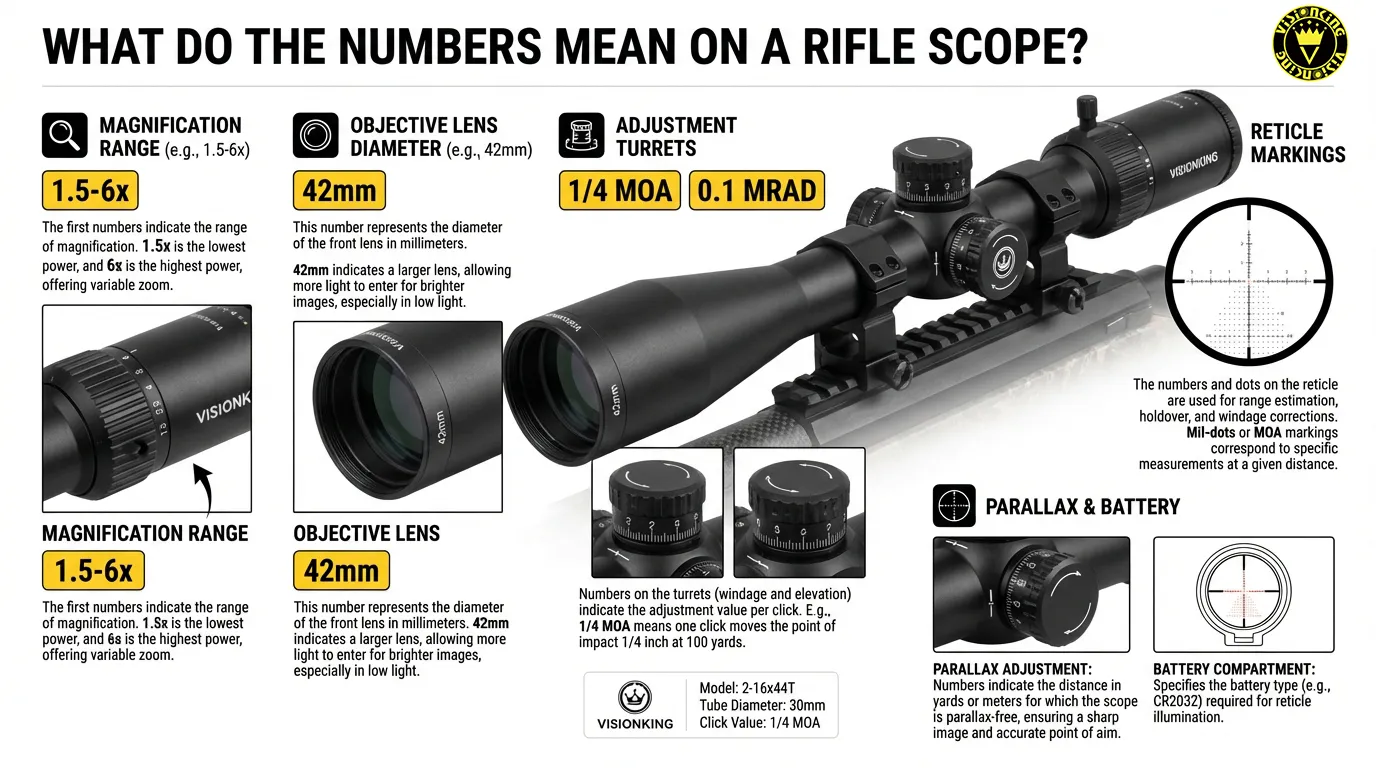
The numbers are always structured to tell you two specific things: how much the scope magnifies the image and how large the front lens is. The \”x\” in the sequence stands for \”times\” and separates these two distinct specifications.
Breakdown of a Standard Scope (e.g., 3-9×40):
| Component | Number Position | Definition |
|---|---|---|
| Magnification | First Number(s) (3-9) | Indicates the zoom level. In this example, the image can be adjusted from 3 times to 9 times larger than the naked eye view. |
| The \”x\” | Middle | Represents \”power\” or magnification factor. |
| Objective Lens | Last Number (40) | The diameter of the front lens in millimeters. This determines how much light enters the scope. |
Why Understanding These Specifications Is Essential for Accuracy
Knowing what do the number mean on a rifle scope goes beyond simple zoom capabilities. These specifications directly impact the physical setup of your rifle and your ability to shoot accurately in various conditions.
- Light Transmission: The objective lens number tells you how bright the image will be. Larger numbers (like 50mm) gather more light for low-light shooting but add weight.
- Mounting Requirements: A larger objective lens diameter requires higher mounting rings to prevent the scope from touching the barrel.
- Field of View: Higher magnification numbers generally reduce your field of view, making it harder to find targets quickly at close range.
- Safety: Understanding specs like eye relief (the distance required between your eye and the scope) is vital to prevent injury from recoil.
Magnification Power: The First Set of Numbers
When you ask what do the number mean on a rifle scope, the answer starts with the very first digits listed in the description. These numbers represent the magnification power, which dictates how much closer the target appears compared to the naked eye. The \”x\” simply stands for \”times.\” For example, if you are using a scope set to 4x, the image you see is four times larger than it would be without the optic. Understanding this basic concept is the first step to selecting the right gear for your shooting distance.
Fixed vs. Variable Magnification Explained
Scopes generally fall into two categories based on these numbers: fixed and variable.
- Fixed Power Scope: If you see a single number before the \”x\” (e.g., 4×32), the magnification is locked. You cannot zoom in or out. These are often simpler and easier to use because there are fewer adjustments to worry about.
- Variable Power Scope: If you see a range of numbers separated by a dash (e.g., 3-9×40), this indicates a variable power scope. You can adjust the magnification anywhere between the lower number (3x) and the higher number (9x).
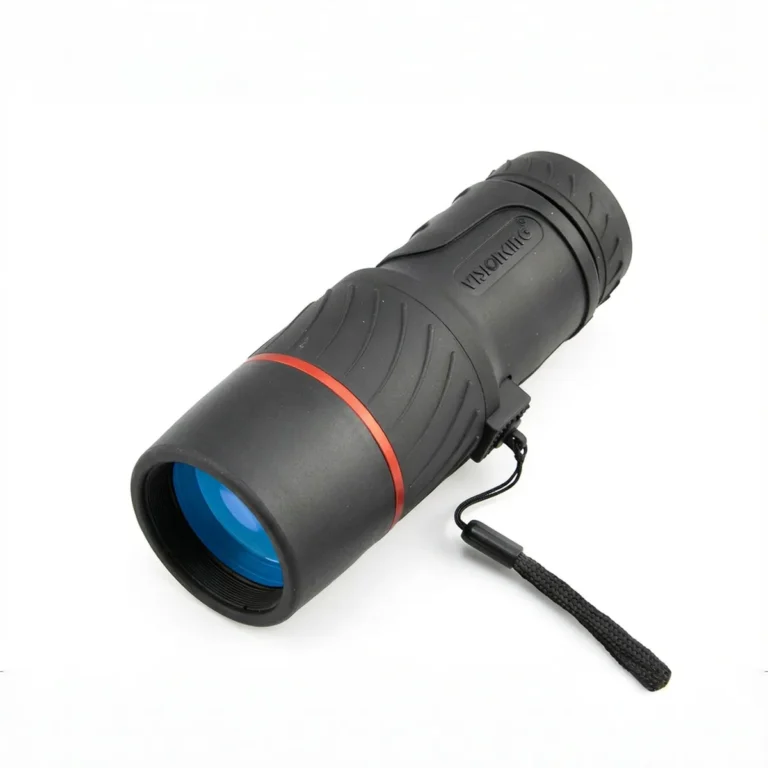
This versatility allows you to scan an area at low power and then zoom in for a precise shot, similar to how a powerful zoom monocular offers adjustable magnification for different viewing conditions.
How to Calculate the Zoom Ratio
While the term \”zoom ratio\” sounds technical, it essentially refers to the range of flexibility your scope offers. In a standard 3-9x configuration, the numbers tell you that the scope is capable of magnifying an image from three times up to nine times its normal size.
- Low End: The first number (3) is your minimum magnification, offering the widest field of view.
- High End: The second number (9) is your maximum magnification, bringing the target much closer.
Knowing what do the number mean on rifle scope specifications helps you understand how adaptable the optic will be in the field. A wider range between these two numbers generally means the scope can handle a broader variety of shooting scenarios.
The Relationship Between Magnification and Image Detail
There is a direct trade-off between magnification power and the area you can see. As you increase the magnification (turning the dial to a higher number), the target appears larger and more detailed. However, this comes at a cost: your Field of View (FOV) decreases.
- High Magnification: Great for seeing details on a distant target, but makes it harder to find the target initially because you are looking through a \”narrower\” tube.
- Low Magnification: Provides a wider view of the area, making it easier to locate moving targets or track game.
Balancing these factors is key. You must decide if you need the extreme detail of high power or the situational awareness provided by lower power settings.
The Objective Lens Diameter: The Final Number
The Role of Lens Size in Light Collection and Clarity
When analyzing what do the number mean on a rifle scope, the number following the \”x\” represents the objective lens diameter in millimeters. For example, in a 3-9×40 scope, the \”40\” indicates a 40mm objective lens. This component acts as the primary light-gathering instrument of your optic. I always explain this simply: think of it as a window. A larger window allows more light to enter the room. Similarly, a larger objective lens captures more light, which is critical for producing a clear and bright image for the shooter.
Understanding the Exit Pupil and Low-Light Performance
The size of this lens directly impacts how well you can see in dim conditions. If you are wondering what do the number on a rifle scope mean for hunting at dawn or dusk, this is the specification to watch. A larger objective lens facilitates a brighter image because it transmits more light through the scope to your eye. While high magnification can darken an image, a substantial objective lens helps counteract this by maintaining brightness, making it easier to identify targets in lower light environments.
Weight and Mounting Considerations for Larger Lenses
While a massive lens might seem like the best choice for brightness, I have to highlight the trade-offs. Increasing the objective lens diameter adds physical bulk and weight to your rifle setup. Furthermore, what do the number mean on rifle scope setups regarding installation? A large objective lens (like 50mm or larger) often requires higher mounting rings to prevent the bell of the scope from touching the rifle barrel. This can alter your cheek weld and shooting comfort, so it is essential to balance light-gathering capability with the practical size and weight limits of your firearm.
Common Examples of Scope Numbers Decoded
When you look at the box, seeing strings of digits can be confusing. Let\’s break down exactly what do the number mean on a rifle scope using the most popular configurations found on the market to clear up the confusion.
What Does 3-9×40 Mean?
This is the classic variable scope configuration. The 3-9 represents the magnification range. You can adjust the setting so the target appears anywhere from 3 times to 9 times larger than it does with your naked eye. The number following the \”x,\” which is 40, stands for the objective lens diameter in millimeters. A 40mm lens is a standard size that effectively balances light transmission with a manageable weight, making it a versatile choice for many shooters.
What Does 6-24×50 Mean?
This set of numbers indicates an optic built for longer distances and detailed observation. The 6-24 means the scope is variable, starting at 6x power and zooming all the way up to 24x. The 50 indicates a large 50mm objective lens. Larger lenses are necessary at high magnification to keep the image bright, similar to the optical physics used in a high-power spotting scope. However, keep in mind that a 50mm lens is heavier and often requires taller mounting rings to ensure the bell of the scope clears the rifle barrel.
Interpreting Fixed Power Scopes like 4×32
Not all scopes zoom. If you see a single number before the \”x,\” like in 4×32, it is a fixed power scope. The 4 means the magnification is locked at 4 power; the image will always appear four times closer. The 32 represents a 32mm objective lens. These scopes are often simpler and lighter because they lack the internal mechanisms required for variable zooming, offering a consistent view every time you shoulder the rifle.
Additional Technical Numbers and Measurements
Beyond the basic magnification and lens size, several other specifications are critical when deciphering what do the number mean on a rifle scope. These measurements directly affect how you mount the optic, how much of the target area you can see, and how safely you can shoot.
Main Tube Diameter: 1-inch, 30mm, and 34mm
The main tube diameter is the measurement of the scope\’s body between the objective bell and the eyepiece. This number does not indicate optical power but is essential for selecting the correct mounting system. The most common sizes are 1-inch (25.4mm) and 30mm, though 34mm is seen in long-range optics. You must match your rings exactly to this diameter; a 30mm tube requires 30mm rings. For versatile mounting options, reliable Visionking rifle scope rings for 25.4mm and 30mm tubes provide the secure fit needed for these standard sizes.
Field of View (FOV) at Different Distances
Field of View (FOV) refers to the width of the area visible through the scope, typically measured in feet at 100 yards. There is an inverse relationship between magnification and FOV:
- Low Magnification: Provides a wider FOV, allowing you to see more of the environment and locate targets quickly.
- High Magnification: Narrows the FOV significantly, isolating the target but reducing situational awareness.
Eye Relief: Safety and Comfort for the Shooter
Eye relief is the specific distance, usually measured in inches, between your eye and the rear lens (ocular lens) required to see a full, clear image. If you are too close or too far, the image will black out around the edges. More importantly, this number represents a safety margin. Adequate eye relief prevents the scope from striking your eye or brow during recoil. Heavy-recoil rifles demand longer eye relief to avoid injury, commonly known as \”scope eye.\”
Turret Adjustments: Understanding MOA and MIL Numbers
The dials on the center of the scope, known as turrets, control Windage (horizontal) and Elevation (vertical) adjustments. Understanding what do the number on rifle scope turrets mean is vital for zeroing your rifle.
- MOA (Minute of Angle): The most common standard for hunters. Often, 1 click equals 1/4 MOA. At 100 yards, this moves the point of impact approximately 1/4 of an inch.
- MIL (Milliradian): A metric-based system often used for tactical shooting and range estimation.
| Adjustment Type | Common Increment | Impact at 100 Yards |
|---|---|---|
| MOA | 1/4 Click | ~0.25 inches |
| MIL | 0.1 Click | ~0.36 inches (1 cm at 100m) |
How Scope Numbers Impact Performance
Parallax Adjustment and Focusing at Range
When we ask what do the number mean on a rifle scope, we often focus on magnification, but these figures directly influence how we see the target at distance. High magnification numbers significantly reduce your Field of View (FOV). As you dial up the power—moving from 3x to 9x, for example—the width of the area visible at 100 yards shrinks. This trade-off means that while you see the target closer, you lose situational awareness of the surroundings. Additionally, higher magnification requires more precise Eye Relief. If your eye isn\’t at the exact distance from the eyepiece (the rear lens), you won\’t see the full image, which is critical for both accuracy and safety to avoid injury from recoil.
Optical Coatings and Glass Quality vs. Lens Size
The second number in the sequence, such as the \”40\” in a 3-9×40 scope, refers to the objective lens diameter in millimeters. This is the primary light-gathering component of your optic.
- Light Transmission: A larger objective lens number (e.g., 50mm or 56mm) captures more light, providing a brighter image in dim conditions.
- Trade-offs: While a bigger number suggests a brighter picture, it adds physical weight to the rifle.
- Mounting: A large objective lens often requires higher mounting rings to clear the barrel, which can affect your cheek weld and shooting comfort.
It is important to balance the lens size with your actual needs; a massive lens isn\’t always better if it makes the rifle too heavy to carry. This principle of objective lens size determining light intake applies to various optics, whether it is a rifle scope or a [portable monocular](https://visionkingscope.com/portable-visionking-8×40-bak4-monocular-metal-body–
Choosing the Right Scope Numbers for Your Shooting Style
When determining what do the number mean on a rifle scope for your specific needs, you have to balance the trade-offs between magnification, light transmission, and physical weight. The numbers aren\’t just technical data; they directly dictate how the optic handles in the field.
Best Specifications for Hunting and Low-Light Conditions
For hunters, the second number—the objective lens diameter—is critical. Since game is often most active at dawn or dusk, you need an optic that can gather enough light to produce a bright image.
- Objective Lens: A larger number (like 50mm) allows more light to enter the scope compared to a 32mm lens. This improves visibility in dim conditions.
- Trade-off: While a massive objective lens brightens the view, it adds significant weight and bulk to your setup. It may also require higher mounting rings, which can alter your cheek weld.
- Magnification: A variable power scope (e.g., 3-9x) is versatile for hunting, allowing you to scan at low power (wider field of view) and zoom in for the shot.
Ideal Magnification for Long-Range Target Shooting
If your goal is precision at distance, you need to focus on the first set of numbers. High magnification allows you to see small targets clearly at hundreds of yards.
- High Power: Scopes with ranges like 6-24x or fixed high power are standard for benchrest shooting.
- Field of View (FOV): Remember that as you crank up the magnification, your FOV shrinks. It becomes harder to find the target initially, but once you are on it, you can see fine details.
- Example: A specialized optic like the Visionking 10-40×56 hunting rifle scope provides the extreme magnification range necessary for long-distance precision.
Selecting a Scope Based on Your Rifle and Caliber
Understanding what do the number on a rifle scope mean regarding safety is just as important as accuracy. The \”eye relief\” specification is vital when pairing a scope with your rifle\’s caliber.
| Specification | Why It Matters for Your Rifle |
|---|---|
| Eye Relief | The distance between your eye and the lens. High-recoil calibers require longer eye relief (3-4 inches) to prevent the scope from hitting your brow during recoil (\”scope eye\”). |
| Tube Diameter | Common sizes are 1 inch or 30mm. Ensure your mounting rings match this number exactly. |
| Turret Clicks | If you dial for range, ensure the click values (MOA or Mil) match your preferred system for windage and elevation adjustments. |
By matching these numbers to your equipment, you ensure a setup that is safe to shoot and physically fits the rifle without obstruction.
Frequently Asked Questions
What is a good magnification for 100 yards?
For general shooting at this distance, the classic **3-9x** variable power configuration is the industry standard. The lower end (3x) provides a wider field of view to help you locate the target, while the high end (9x) offers enough zoom to see impact points clearly. If you prefer a simpler setup without adjustment dials, a fixed **4x** power scope is also a reliable choice that balances target visibility with situational awareness.
Does a larger objective lens provide a brighter image?
Yes, generally speaking. When deciphering **what do the number mean on a rifle scope**, the number following the \”x\” represents the **objective lens diameter** in millimeters. A larger lens (like 50mm) gathers more light than a smaller one (like 32mm), which results in a brighter image during low-light conditions such as dawn or dusk. However, there are trade-offs to consider:
* **Weight:** Larger lenses add significant bulk to your rifle.
* **Mounting Height:** You may need taller mounting rings to prevent the large bell of the scope from touching the barrel.
How do I choose the right tube size for my rings?
To select the correct rings, you must identify the main tube diameter, which is a separate specification from the magnification or objective lens numbers. The most common tube sizes are **1-inch** and **30mm**, though heavier tactical scopes may use **34mm**. You must purchase rings that match this diameter exactly; a mismatch will either fail to hold zero or crush the scope tube.