Why Thermal Rifle Scopes Are Essential for Modern Night Hunting
For the serious hunter, the transition from daylight to darkness requires equipment that guarantees precision and safety. The best thermal rifle scope does not merely amplify light; it transforms the hunting experience by revealing what the naked eye and standard optics cannot see. High-end devices, such as the Thermion 2 LRF XP50 Pro, have set a new benchmark for night hunting, combining classic aesthetics with cutting-edge sensor technology to solve the age-old problems of low visibility and target identification.
Thermal Imaging vs. Traditional Night Vision
The core difference lies in the source of the image. Traditional night vision relies on amplifying available ambient light or using infrared illuminators, which can be limited by range and environmental obstructions. In contrast, thermal imaging detects heat radiation, making it superior for detecting living targets in absolute darkness.
Modern thermal scopes utilize advanced sensors to deliver uncompromising performance:
- Heat Detection: Sensors with a resolution of 640×480 pixels @ 17 µm capture minute temperature differences, creating a crisp image regardless of light conditions.
- Weather Independence: While night vision struggles in poor weather, top-tier thermal scopes with NETD <25 mK sensitivity cut through rain, fog, and heavy humidity.
- Day and Night Utility: Unlike sensitive night vision tubes that can be damaged by daylight, thermal scopes like the Thermion 2 series are fully functional 24/7.
The Advantages of Using Thermal Optics in the Field
Equipping a rifle with a high-performance thermal optic provides distinct tactical advantages that increase success rates and ethical shot placement. The integration of fast aperture F50/1.0 germanium lenses ensures that the sensor receives maximum thermal energy, resulting in a detailed and informative image.
Key benefits of using advanced thermal technology include:
- Extreme Detection Range: Capable of detecting a standard 1.8m tall object at distances up to 1800 meters, allowing hunters to scan vast areas quickly.
- Precision Ranging: Many modern units feature an integrated Laser Rangefinder (LRF). For example, the Thermion 2 LRF XP50 Pro can accurately measure distances up to 800 meters, removing the guesswork from long-range shots.
- Enhanced Identification: High-contrast HD AMOLED displays (1024×768) render sharp visuals, helping hunters distinguish between game animals and non-targets even in low-temperature contrast environments.
- Durability and Reliability: Built to withstand heavy recoil (rated for .375 H&H, 12-gauge, and 9.3×64) and fully waterproof (IPX7), these scopes are engineered for harsh field conditions.
Best Thermal Rifle Scopes of 2026: Top Recommendations
The market for thermal optics has exploded, and 2026 brings us some of the most refined technology we have ever seen. We are moving past the days of grainy, lagging images. Today, the best thermal rifle scope options combine high-resolution sensors with user-friendly interfaces that feel just like using a standard optic. Whether you are into hog hunting or predator control, choosing the right tool is about balancing sensor quality, lens size, and onboard features. Below are the standouts that are dominating the field this year.
Best Overall Performance: AGM Adder and Pulsar Thermion 2
When you want a scope that does it all and looks good doing it, the AGM Adder and Pulsar Thermion 2 series are the leaders of the pack. What sets these apart is their traditional 30mm tube design. Unlike the boxy, camera-like thermals of the past, these mount to your rifle using standard rings, keeping your shooting platform familiar and ergonomic.
- Image Quality: Both utilize top-tier sensors (often 640×512 resolution) that provide crisp details, allowing you to distinguish between a sow and a boar at 200+ yards.
- Battery Life: They feature dual battery systems, ensuring you don\’t go dark in the middle of a night hunting session.
- Features: Onboard recording and Wi-Fi streaming come standard, making it easy to share your hunt.
If you are looking for a reliable workhorse that bridges the gap between traditional glass and thermal tech, these are the ones to beat.
Best Value for the Money: Athlon Cronus and Talion Series
Not everyone wants to drop the price of a used car on an optic. If you are looking for the best thermal rifle scope for the money, the Athlon Cronus and Pulsar Talion series hit the sweet spot. These scopes typically use a 384×288 sensor, which is perfectly adequate for identifying targets within 150 to 200 yards—the typical engagement distance for most night hunters.
Why they offer great value:
- Cost-Effective Sensors: You get clear thermal detection without paying the premium for military-grade resolution.
- Simplicity: They strip away some of the complex ballistic calculators found in higher-end models but keep the essential color palettes and zeroing profiles.
- Usability: Perfect for the weekend warrior who needs reliable gear for pest control without overcomplicating the setup.
Best High-End Precision: Trijicon IR-HUNTER and Armasight Commander
For professional hunters and tactical shooters who demand absolute precision, \”good enough\” doesn\’t cut it. The Trijicon IR-HUNTER and Armasight Commander represent the pinnacle of durability and sensor sensitivity. These units are built to withstand heavy recoil and harsh environments.
These scopes often feature advanced reticle systems and are compatible with a laser rangefinder to ensure your holdovers are exact, even in pitch-black conditions. While we focus on thermal tech here, serious shooters often spend the daylight hours scouting terrain with a Visionking 30-90×100 spotting scope with wifi camera to locate bedding areas before deploying these high-end thermals at night.
Key High-End Features:
- 60Hz Refresh Rates: Ensures smooth tracking of moving targets with zero lag.
- Turret Quality: Tactile, precise adjustments that hold zero under the heaviest use.
- Rugged Housing: usually made from aircraft-grade aluminum to survive drops and field abuse.
Best Compact and Lightweight Options for Mobile Hunters
If your hunting style involves miles of stalking through brush, weight is your enemy. Compact thermal scopes are designed to minimize fatigue. These units strip down the bulk, offering a streamlined profile that won\’t snag on gear.
- Weight: Often under 20 ounces.
- Form Factor: Short bodies that leave rail space for other accessories.
- Clip-on Versatility: Some compact options can double as a handheld monocular or clip onto your day scope.
Quick Comparison of Top Picks
| Category | Model Recommendation | Best For | Key Feature |
|---|---|---|---|
| Best Overall | AGM Adder / Pulsar Thermion 2 | General Night Hunting | 30mm Tube Design |
| Best Value | Athlon Cronus / Talion | Budget-Conscious Hunters | High Performance/Price Ratio |
| High-End | Trijicon IR-HUNTER | Professional / Tactical | Mil-Spec Durability |
| Compact | Bering Optics Hogster | Stalking / Mobile | Lightweight Footprint |
Choosing the right unit depends entirely on your terrain and target. A hog hunter in thick brush has different needs than a coyote caller scanning open fields. Assess your typical engagement range, and invest in the best sensor you can afford.
How to Choose the Right Thermal Rifle Scope
Selecting the best thermal rifle scope isn\’t just about picking the most expensive model; it’s about matching the specs to your specific hunting environment. Whether you are scanning vast fields or working in tight timber, understanding the core technology ensures you don\’t overspend on features you won\’t use or end up with an optic that fails when it counts.
Understanding Sensor Resolution and Pixel Pitch
The sensor (microbolometer) is the heart of your thermal optic. Resolution dictates how crisp the image looks, while pixel pitch (measured in microns, µm) affects the scope\’s size and magnification potential.
- Resolution:
- 384×288: The industry standard for the best thermal rifle scope for the money. It offers solid performance for typical hunting ranges (under 300 yards).
- 640×480 (or 640×512): High-end performance. This resolution provides a much sharper image and maintains clarity even when you use digital zoom.
- Pixel Pitch:
- 17µm: Older standard, still effective but requires larger lenses for higher magnification.
- 12µm: The modern standard. It allows for higher base magnification and lighter units without sacrificing performance.
The Importance of Refresh Rate for Smooth Tracking
Refresh rate, measured in Hertz (Hz), determines how many times per second the screen updates. This is critical for night hunting when targets are on the move.
- 30Hz: Acceptable for slow-moving observation but can appear \”choppy\” or laggy when scanning quickly.
- 50Hz / 60Hz: The preferred standard for hunting. It provides smooth, real-time imaging, which is essential when leading a running target like a wild hog or coyote.
Pro Tip: Avoid scopes with <9Hz refresh rates for hunting; these are often older units or export-restricted models designed for static observation, not dynamic shooting.
Balancing Magnification and Field of View (FOV)
There is always a trade-off between how close the target appears (magnification) and how much area you can see at once (FOV).
- Low Base Mag (1x – 2.5x): Offers a wide FOV. This is ideal for close-range engagements, such as hog hunting in brush, where situational awareness is key.
- High Base Mag (3x – 5x): Offers a narrow FOV but better long-range identification. This is better for predator hunters scanning open plains.
Digital Zoom Warning: unlike optical zoom, digital zoom simply enlarges the pixels. If you start with a low-resolution sensor (384×288) and zoom in 4x, the image will become very pixelated. This is why a 640-resolution sensor is the best thermal rifle scope choice if you plan to zoom frequently.
Detection, Recognition, and Identification Ranges Explained
Manufacturers often advertise massive \”Detection Ranges\” (e.g., 2,000 yards), but this number can be misleading for practical use. You need to understand the DRI criteria:
| Metric | What it Means | Practical Application |
|---|---|---|
| Detection | You see a heat source (a glowing pixel). | You know something is there, but not what it is. |
| Recognition | You can distinguish the object type. | You can tell it is a four-legged animal, not a car or rock. |
| Identification | You can identify the specific species. | You can confirm it is a boar and not a calf or a dog. |
For ethical shooting, Identification Range is the only number that matters. Ensure your scope allows you to positively ID your target at your expected shooting distance.
Top Thermal Scopes by Application and Hunting Style
Choosing the best thermal rifle scope isn\’t just about buying the most expensive model; it is about matching the optic\’s capabilities to your specific hunting environment. Whether you are dealing with heavy recoil, long-distance shots, or the need for lightweight mobility, different scenarios demand specific features. Based on the industry-leading technology found in Pulsar\’s lineup, here is how we break down the right tools for the job.
Best Scopes for Wild Boar and Hog Hunting
Hog hunting is demanding. It often takes place in rough terrain, poor weather, and involves heavy-hitting calibers. For this application, durability and thermal sensitivity are non-negotiable. A scope like the Thermion 2 LRF XP50 Pro stands out because it is built to withstand high-caliber recoil, rated for cartridges as powerful as .375 H&H, 12-gauge, and 9.3×64.
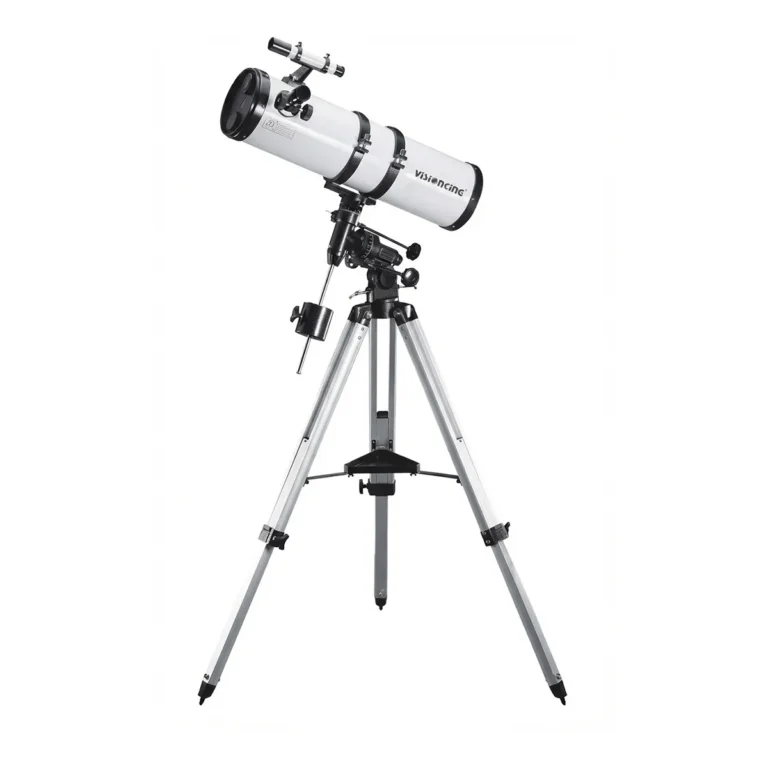
When hunting boars, you are frequently dealing with rain, fog, or cold mornings where thermal contrast is low. This is where the NETD <25 mK sensitivity becomes a game-changer. It allows the sensor to pick up minute temperature differences, ensuring the target is clearly defined against the background even in adverse conditions. Before the sun goes down, using a high-quality Visionking 15-45×60 angled zoom spotting scope to scout the perimeter can help you identify trails and rooting areas before switching to thermal optics for the night.
Key Requirements for Hog Hunters:
- High Recoil Rating: Must handle heavy calibers.
- Thermal Sensitivity: NETD <25 mK for detail in rain or fog.
- Fast Aperture Lens: F50/1.0 lenses capture maximum thermal energy.
Precision Optics for Long-Range Predator Control
For hunters targeting coyotes or foxes across open fields, distance is the primary challenge. You need to detect a heat signature far away and, more importantly, identify it correctly before taking a shot. The best thermal rifle scope for this purpose must combine high sensor resolution with accurate ranging capabilities.
The flagship Thermion 2 models excel here with a detection range of up to 1800 meters. However, seeing a target is only half the battle; knowing the exact distance is crucial for ballistic compensation. This is why the integrated Laser Rangefinder (LRF) is essential. With the ability to measure distances up to 800 meters accurately, the LRF removes the guesswork from night hunting. The combination of a 640×480 pixel sensor and an HD AMOLED display ensures that even at high magnification (up to 16x), the image remains crisp enough for precise shot placement.
| Feature | Benefit for Long-Range Hunting |
|---|---|
| 1800m Detection Range | Allows early spotting of approaching predators. |
| Built-in LRF (800m) | Provides exact distance data for accurate holdovers. |
| HD AMOLED Display | Delivers sharp, high-contrast images at high zoom levels. |
Versatile Options for Small Game and Pest Management
Not every hunt requires a long-range powerhouse. For pest control or stalking small game, agility and weight are often more important than extreme range. Mobile hunters need a setup that is compact and easy to maneuver in tight spaces.
While the flagship Thermion offers the classic 30mm tube design, the Talion XQ35 is the superior choice for those prioritizing compactness. It offers versatile mounting options and a lightweight form factor without sacrificing core thermal performance. This makes it the best thermal rifle scope for the money when your priority is stalking on foot rather than sitting in a blind. For scanning large areas quickly before committing to a stalk, carrying a set of Visionking digital night vision binoculars is a smart strategy to reduce arm fatigue while keeping your rifle ready.
Why Choose Compact Models:
- Weight: Reduces fatigue during long stalks.
- Ergonomics: Easier to handle in dense brush or from a vehicle.
- Battery Efficiency: Dual battery systems (internal and external) ensure you don\’t run out of power during a long night of pest control.
Advanced Features and Modern Technology in Thermal Optics
The best thermal rifle scope today is more than just a sighting device; it is a sophisticated piece of technology designed to solve real-world hunting challenges. We are seeing a shift where high-end optics act as a complete ecosystem, combining detection, ranging, and recording into a single, rugged unit.
Integrated Laser Rangefinders (LRF) and Ballistic Tools
Estimating distance in total darkness is incredibly difficult, even for experienced hunters. This is why the flagship models, such as the Thermion 2 LRF XP50 Pro, now feature a built-in Laser rangefinder. This integrated tech allows you to measure distances up to 800 meters instantly, ensuring precise shot placement without needing to carry separate gear.
While some hunters still rely on a handheld Visionking 6×25 laser range finder for scouting, having this capability directly in your scope allows for faster reaction times. The seamless integration of LRF technology transforms night hunting from a guessing game into a precision sport.
Onboard Video Recording and Wi-Fi Streaming Capabilities
Modern hunters want to capture and share their experiences. Leading thermal scopes now come equipped with substantial internal memory—often 16 GB—to store hours of video and thousands of photos. Beyond simple recording, connectivity is a major focus.
Through integration with platforms like the Stream Vision 2 app, these devices offer:
- Remote Control: Adjust settings or view the image via a smartphone screen.
- Cloud Storage: Automatically back up your footage.
- Firmware Updates: Keep the device current with the latest software enhancements wirelessly.
Durability, Recoil Rating, and Battery Reliability
Electronics in the field must be tough. The best thermal rifle scope options are built to withstand high-caliber recoil, rated for powerful rounds like .375 H&H, 12-gauge, and 9.3×64. Furthermore, reliability in wet conditions is non-negotiable, with top models featuring IPX7 waterproof ratings to handle rain, snow, and submersion.
Power management has also evolved to support long hunts.
| Feature | Specification | Benefit |
|---|---|---|
| Dual Battery System | Internal + External Battery | Allows for hot-swapping without powering down. |
| Operation Time | Up to 10 Hours | Sufficient for a full night of hunting on a single charge. |
| Construction | 30mm Metal Tube | Mounts easily using standard rings while protecting internal tech. |
Practical Tips for Using Thermal Scopes in the Field
Zeroing Your Thermal Optic for Maximum Accuracy
Zeroing a thermal scope isn\’t the same as dialing in standard glass. Since the scope detects heat, a standard paper target won\’t work because the ink and paper are the same temperature. To get the best thermal rifle scope accuracy, you need to create a thermal contrast point.
- Foil Tape: Stick a small square of aluminum foil tape on your target. Tilt it slightly so it reflects the cool sky; it will appear as a cold black square against a warmer backstop.
- Hand Warmers: Tape a chemical hand warmer to the bullseye. This creates a glowing hot spot that is easy to aim at.
- Frozen Water Bottles: For a cold contrast, hang a frozen water bottle in front of a cardboard box.
Always double-check your mount tension before zeroing. Even the most expensive sensor won\’t hold zero if the hardware is loose.
Daytime vs. Nighttime Operation Guidelines
One of the massive advantages of thermal over night vision is versatility. You can use thermal optics 24/7 without damaging the sensor. However, the image quality shifts depending on the environment.
- Night Operations: This is the prime time for night hunting. As the air cools, inanimate objects like rocks and trees lose heat, while animals remain hot. This creates the highest contrast and sharpest images.
- Daytime Operations: The sun heats up the terrain, leading to \”thermal crossover.\” Rocks, trees, and the ground can become as hot as the animals, making detection harder.
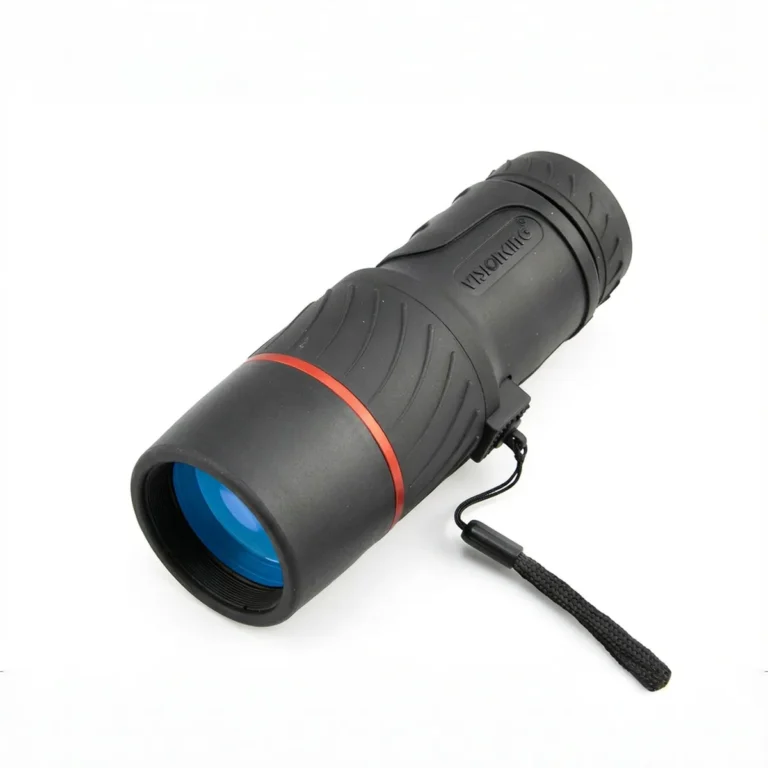
While thermal is dominant at night, carrying a secondary optic like a Visionking digital night vision monocular can be useful for scanning or navigating during transition periods when thermal contrast is flat.
Mistakes to Avoid When Identifying Targets
The most dangerous mistake new users make is shooting at \”blobs.\” Just because something glows doesn\’t mean it\’s your target. A calf bedding down can look identical to a large pig from a distance.
- Wait for Movement: Watch how the target moves. The gait of a coyote is distinct from a domestic dog.
- Identify Anatomy: Don\’t shoot until you can clearly distinguish the head, ears, and legs.
- Know Your Range: Even the best thermal rifle scope for the money loses resolution at extreme distances. If the pixelation is too high to confirm the species, get closer.
This is especially critical in hog hunting, where sounders often move near livestock. Never rely solely on the heat signature; confirm the shape and behavior before taking the shot.
Frequently Asked Questions About Thermal Scopes
Can thermal rifle scopes be used during the day?
Yes, absolutely. Unlike traditional night vision technology, which can be permanently damaged by exposure to bright light, thermal scopes detect heat radiation rather than light. This means you can safely use the **best thermal rifle scope** in broad daylight without issues. In fact, they are incredibly useful during the day for spotting camouflaged game hiding in dense brush or tall grass where standard glass optics might miss them.
What is the best thermal resolution for hunting?
For the average hunter, a sensor resolution of **384×288** is generally considered the sweet spot. It offers a great balance of performance and cost, making it the **best thermal rifle scope for the money** for typical ranges (inside 300 yards). However, if you require long-range identification or plan to use high digital magnification, you should aim for a **640×480** or **640×512** sensor. Higher resolution provides a crisper image and maintains detail when you zoom in on a target.
Do thermal scopes replace the need for night vision?
Not entirely, as they serve different purposes. Thermal is superior for **Night hunting** detection because it highlights living things instantly, even through light fog or smoke. However, traditional night vision (image intensification) is often better for navigation and positive identification of cold details, such as reading signs or seeing antlers clearly. Many hunters use standard optics like Visionking 8×36 binoculars for daytime scouting and initial scanning, switching to thermal optics when it\’s time to take the shot in low-light conditions.
Is it worth getting a thermal scope for pest control?
If you are dealing with invasive species, a thermal scope is an invaluable tool. For applications like **Hog hunting** or coyote control, thermal optics allow you to spot animals that are naturally camouflaged or active in complete darkness. The ability to see heat signatures allows for faster target acquisition and follow-up shots on sounders of hogs. While the upfront cost is higher, the efficiency it brings to pest management makes it a worthwhile investment for landowners and professional hunters.