Are you struggling to squeeze real accuracy out of your rimfire setup?
Finding the best scope for 22lr rifle shooting is often more complex than simply buying a standard deer optic.
You might think any cheap glass will do.
But if you want consistent hits on small game or tight groups at 50 yards, you need specific features like proper parallax adjustment and rimfire-tuned reticles.
In this guide, you’re going to get a breakdown of the top optics for 2024, from budget-friendly plinkers to high-end competition glass.
Let’s dive right in.
Why You Need a Dedicated Scope for Your .22LR Rifle
Many shooters mistakenly believe that any optic will suffice for a rimfire platform. However, the best scope for 22lr rifle setups are engineered specifically to handle the unique characteristics of the cartridge. While you can physically mount a high-power deer scope on a .22, the internal mechanics and optical settings often clash with the practical application of rimfire shooting.
The Difference Between Centerfire and Rimfire Scopes
The primary distinction lies in intended use and construction. Centerfire scopes are built to withstand heavy recoil and view targets at extended ranges. In contrast, the best scope for a 22 rifle is designed for finesse, lighter weight, and shorter engagement distances.
Comparison: Centerfire vs. Rimfire Optics
| Feature | Centerfire Scope | Rimfire Scope |
|---|---|---|
| Parallax Setting | Fixed at 100–150 yards | Fixed at 50–60 yards |
| Reticle Thickness | Thicker for visibility | Thinner for precision on small targets |
| Size & Weight | Larger, heavier build | Compact, lightweight profile |
| Recoil Rating | High shock resistance | Optimized for low recoil |
Optimizing for Short-Range Ballistics
The .22LR cartridge has a distinct \”rainbow\” trajectory. It drops significantly faster than high-velocity centerfire rounds. A standard scope calibrated for a .308 will not provide the necessary holdover points for a .22 bullet dropping inches at 75 yards.
To get the best scope for .22 rifle performance, you need optics that account for this steep ballistic curve. Dedicated rimfire scopes often feature:
- Drop-Compensating Reticles: Markings specifically calculated for 36-grain or 40-grain rimfire velocities.
- Fine Turret Adjustments: usually 1/4 MOA or finer to dial in precise shots on small game.
The Importance of Parallax Adjustment for Rimfire
Parallax error is the most critical reason to choose a specific rimfire optic. Most centerfire scopes are factory-set to be parallax-free at 100 yards or more. If you attempt to shoot a squirrel or target at 25 yards with such a scope, the target will appear blurry, and the crosshairs may seem to \”float\” off-center if your eye alignment isn\’t perfect.
For the best scope for 22 rifle accuracy, look for:
- Fixed Parallax: Set at 50 yards (standard for rimfire).
- Adjustable Objective (AO): Allows you to manually focus the parallax down to 10 or 15 yards, ensuring a crisp image and zero reticle shift at close range.
Key Factors to Consider When Choosing a .22LR Scope
Finding the best scope for 22lr rifle setups involves balancing features that specifically benefit rimfire ballistics. Unlike high-powered centerfire optics, rimfire scopes prioritize lightweight designs and parallax settings tuned for shorter distances. Here is what you need to look for to get the most out of your rifle.
Magnification Ranges: Variable vs. Fixed Power
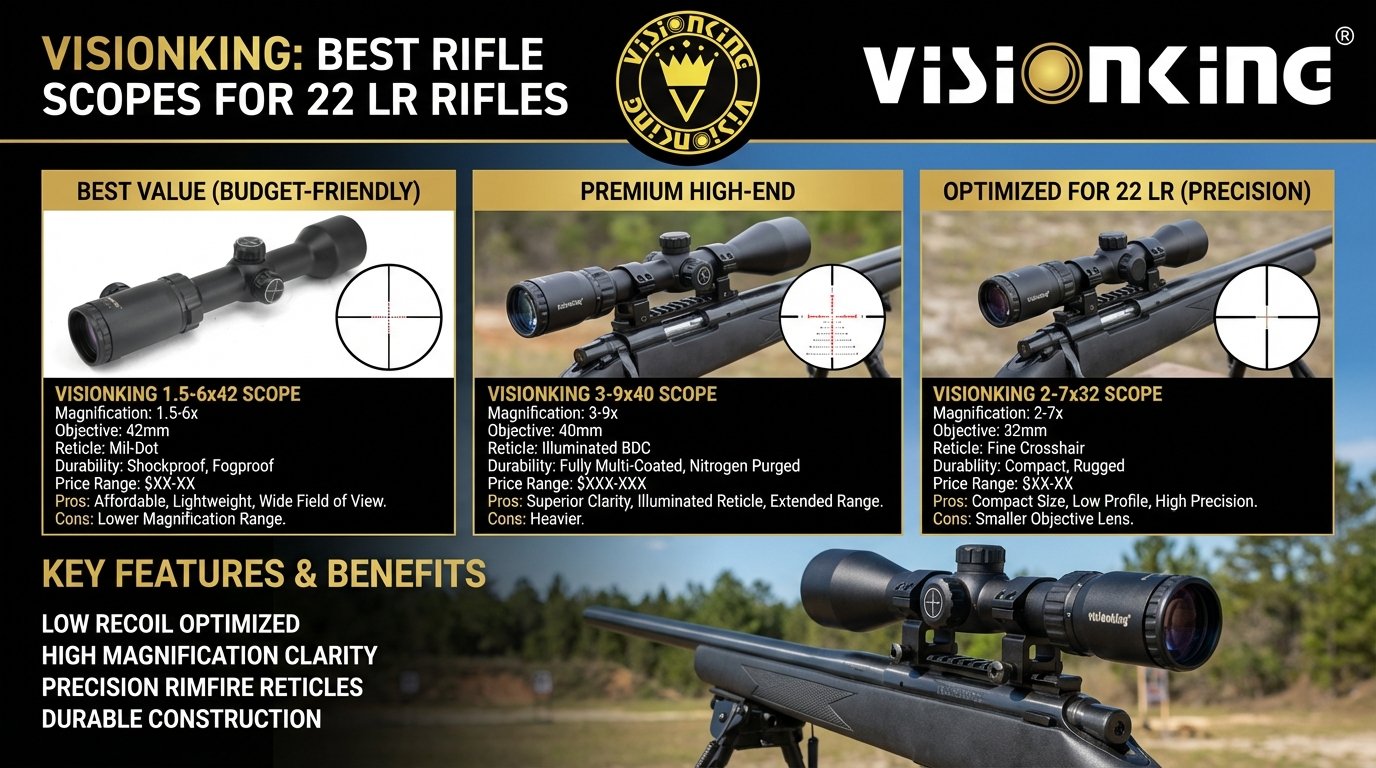
For most rimfire applications, you do not need extreme magnification. The industry \”sweet spot\” is the 3-9x range, which covers everything from backyard plinking to small game hunting.
- 2-7x: Ideal for general use and moving targets. This range offers a wider field of view and is typically lighter.
- 3-9x: The standard for versatility, allowing for precise shots at 50 yards while maintaining usability at closer ranges.
- 4-12x: Best for shooters pushing the .22 LR cartridge to its limits (100+ yards) or for varmint hunting where precision is key.
Reticle Types: Duplex vs. BDC for Rimfire
The reticle you choose depends heavily on how you plan to use the best scope for .22 rifle platforms.
- Duplex (V-Plex/Truplex): These are simple, uncluttered crosshairs. They are excellent for hunting where you need to acquire a target quickly without visual distractions.
- BDC (Bullet Drop Compensator): Since .22 LR bullets drop significantly after 50 yards, BDC reticles like the Rimfire MOA or DZ22 are incredibly useful. They feature hash marks calibrated specifically for rimfire ballistics, allowing you to hold over accurately without adjusting turrets.
Objective Lens Size and Light Transmission
You generally don\’t need a massive objective lens for a rimfire rifle. Most top-tier options range between 32mm and 40mm. A 32mm lens allows the scope to be mounted lower to the barrel, improving cheek weld and balance. However, a 40mm lens will let in more light, which is crucial for dawn or dusk hunting. Look for fully multi-coated optics or proprietary coatings like HydroShield to ensure maximum light transmission and clarity in varying weather conditions.
Weight and Durability for Small Rifles
Rimfire rifles are typically lightweight, so mounting a heavy optic can ruin the balance of the gun. The best scope for a 22 rifle should be built from aircraft-grade aluminum to maintain a high durability-to-weight ratio. Even though recoil is minimal, the scope must be rugged. Ensure the optic is nitrogen-purged and O-ring sealed to be fully fog-proof and waterproof. To keep your lightweight setup secure, pairing your optic with high-quality rifle scope rings is essential for maintaining zero during field use.
Top Rated Scopes for .22LR Rifles in 2026
Finding the best scope for 22lr rifle setups means balancing glass quality, reticle functionality, and rimfire-specific parallax settings. Based on extensive field testing and optical performance, we have categorized the top contenders that dominate the market this year. These optics are specifically tuned for the unique recoil and ballistic properties of rimfire cartridges.
Best Overall Rimfire Scope
The Vortex Crossfire II 2-7×32 Rimfire stands out as the definitive choice for most shooters. It hits the perfect balance between performance and price, offering a versatile 2-7x magnification range that covers everything from plinking to small game hunting. Unlike standard centerfire scopes, this model features a parallax set specifically at 50 yards, ensuring your target is crisp and your aim is true at typical .22 distances.
Key Features:
- Reticle: V-Plex (MOA), uncluttered and precise.
- Parallax: Fixed at 50 yards for rimfire accuracy.
- Build: Nitrogen-purged and O-ring sealed for waterproof/fog-proof performance.
- Warranty: Backed by the Vortex VIP Lifetime Warranty.
Best Budget-Friendly Options Under $100
If you are looking for the best scope for a 22 rifle without breaking the bank, the Simmons 3-9×32 .22 Mag is the undisputed king of value. Priced typically between $50 and $60, it delivers surprising clarity and durability. It utilizes Simmons\’ proprietary HydroShield lens coating to maintain a clear sight picture regardless of weather conditions.
Why it wins the budget category:
- Value: Includes mounting rings (often dovetail) right in the box.
- Weight: Extremely lightweight, preventing top-heaviness on smaller rifles.
- Optics: Fully coated optics provide sufficient light transmission for daylight shooting.
- Reticle: Features the Truplex reticle for quick target acquisition.
Best High-End Optics for Competition
For shooters who demand premium glass and precision, the Leupold VX-Freedom 3-9×40 Rimfire is the top-tier upgrade. Leupold is renowned for optical clarity, and this model brings that expertise to the rimfire platform. The 3-9x magnification paired with a 40mm objective lens ensures excellent light transmission, making it a superior choice for low-light conditions or competitive shooting where detail matters.
Performance Highlights:
- Reticle: Rimfire MOA reticle designed specifically for .22 LR holdovers.
- Parallax: Adjusted to 60 yards, optimizing focus for mid-range precision.
- Durability: Aircraft-grade aluminum construction that is rugged yet lightweight.
- Clarity: Twilight Light Management System for superior brightness.
Best Compact Scopes for Survival Rifles
When outfitting a survival rifle or a dedicated truck gun, durability and field readiness are paramount. The Bushnell Rimfire 3-9×40 serves as an excellent option for this role. While often categorized as a hunting scope, its rugged construction and specialized reticle make it ideal for variable field environments where you might need to take shots at different distances quickly.
Comparison of Field-Ready Options:
| Feature | Bushnell Rimfire 3-9×40 | Athlon Optics Neos 4-12×40 |
|---|---|---|
| Best Use | Hunting / Survival | Long Range / Varmint |
| Reticle | DZ22 (Drop Zone BDC) | BDC 22 Rimfire |
| Magnification | 3-9x | 4-12x |
| Tube Construction | One-piece Aluminum | Aircraft Grade Aluminum |
| Parallax | Fixed | Side Focus (Adjustable) |
The Bushnell\’s DZ22 reticle is particularly useful for survival scenarios, offering bullet drop compensation points that take the guesswork out of longer shots. Meanwhile, the Athlon Optics Neos offers higher magnification (up to 12x) and a side focus parallax adjustment, making it a strong contender if your survival strategy involves engaging small targets at extended ranges.
Best .22LR Scopes for Specific Shooting Activities
Choosing the best scope for 22lr rifle setups isn\’t a one-size-fits-all situation. The glass you need for bagging squirrels in the deep woods is totally different from what you need to punch a single ragged hole in a paper target at 50 yards. I always tell shooters to match their optic to their primary mission.
Optimal Optics for Small Game and Squirrel Hunting
When I head out for small game, weight and field of view are my top priorities. You don\’t want a heavy optic throwing off the balance of a lightweight rimfire rifle while you are hiking. For hunting, the best scope for 22 rifle platforms is usually a variable power optic in the 2-7x or 3-9x range.
- Low Magnification: Allows for quick target acquisition on moving game.
- Reticle: A simple Duplex or a thicker crosshair helps you see the reticle against dark backgrounds like tree bark or brush.
- Durability: Look for capped turrets so you don\’t accidentally knock your zero off while moving through thickets.
Precision Scopes for Benchrest and Target Shooting
If your goal is precision benchrest shooting, the rules change. You need high magnification and fine adjustments. The best scope for a 22 rifle used in competition often features magnification ranges of 16x, 24x, or even higher. This allows you to see exactly where you are aiming on a tiny bullseye.
Key features for target scopes:
- Fine Reticles: Thin crosshairs or center dots that don\’t obscure the target.
- Parallax Adjustment: Essential for removing optical error at specific distances.
- Target Turrets: Exposed turrets allow for fast clicks to adjust for wind and elevation.
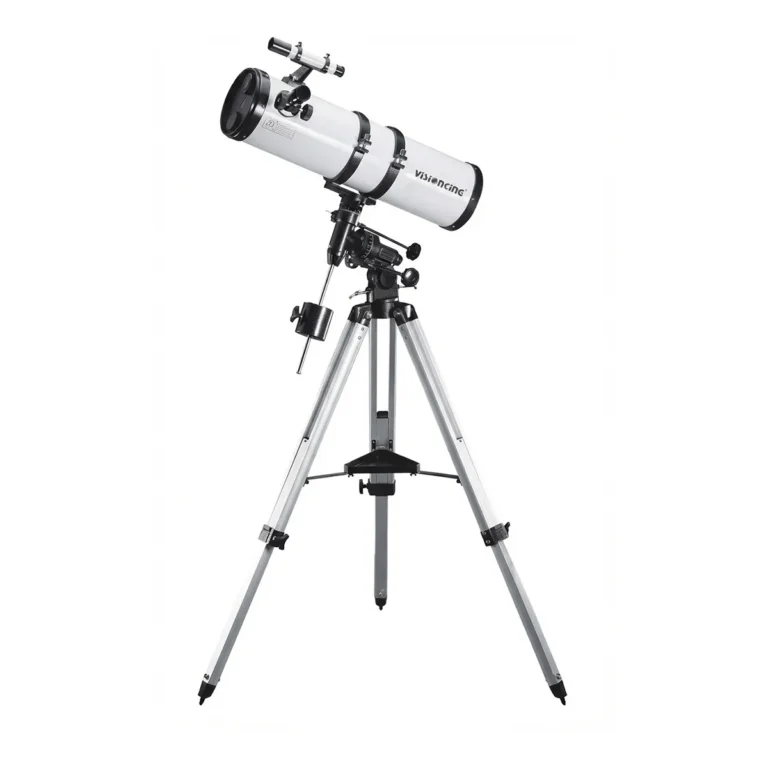
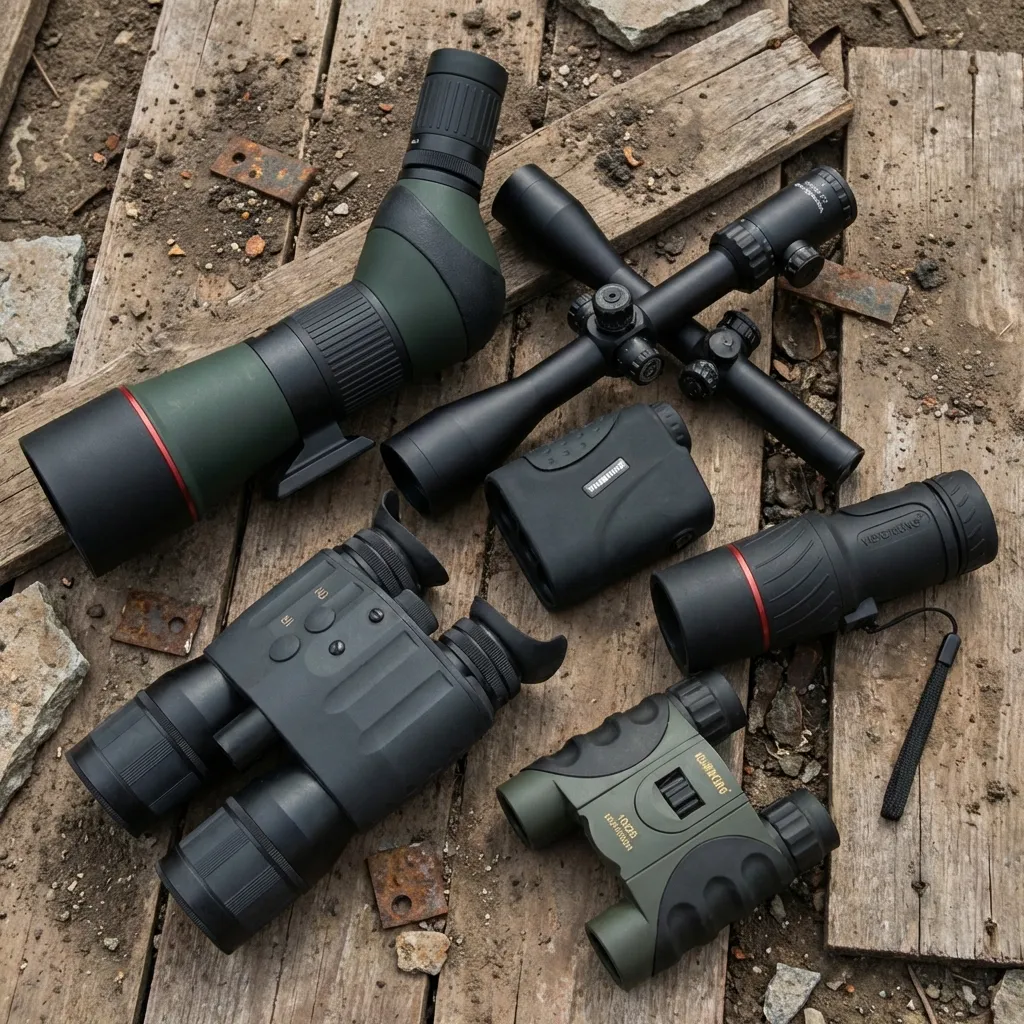
Serious benchrest shooters also know the value of spotting their shots without breaking their shooting position. Setting up a high-quality Visionking 60-350mm Refractor Astronomical Telescope Monocular Spotting Scope next to you on the bench allows for immediate feedback on shot placement, saving you from constant fatigue.
Versatile Scopes for General Plinking and Training
For general plinking—hitting tin cans, steel spinners, or casual paper targets—you want versatility. The best scope for .22 rifle training is one that balances magnification with ease of use. A standard 3-9x40mm or a fixed 4x scope is often perfect here.
These scopes are generally more affordable and rugged. They offer enough power to hit targets at 50 to 100 yards but aren\’t so complex that they slow you down. If you enjoy documenting your range sessions or training progress, you can even use a Visionking Universal Digiscoping Camera Bracket attached to your spotting optics to record your hits and analyze your performance later.
Understanding Parallax and Focus in Rimfire Shooting
When hunting for the best scope for 22lr rifle, many shooters overlook parallax until they hit the range and realize their image is blurry at 25 yards. Understanding this optical concept is the difference between a tack-driver and a frustrating day of missing small targets.
What is Parallax and Why Does it Matter at Close Range?
Parallax error occurs when the reticle and the target are not on the same focal plane inside the scope. In plain English, if you move your head slightly behind the eyepiece and the crosshairs appear to \”swim\” or shift position on the target, you have a parallax issue.
For rimfire shooters, this is critical because we often shoot at very close distances. Most standard rifle scopes are set to be parallax-free at 100 or 150 yards. If you use that same optic at 25 yards for squirrel hunting, the target might look out of focus, and your point of impact can shift significantly just because your cheek weld changed slightly. The best scope for a 22 rifle allows you to correct this visual alignment at short ranges.
Side Focus vs. Adjustable Objective (AO)
To fix parallax, scopes use a focusing mechanism. There are two main styles you will encounter:
- Adjustable Objective (AO): This is a ring located on the objective bell (the front lens) of the scope. You twist the entire front ring to set the distance. AO is very common on the best scope for .22 rifle options because it is mechanically simple, durable, and keeps the scope weight down.
- Side Focus: This is a knob located on the left side of the turret housing (saddle). It is much easier to reach while you are in a shooting position. While often found on more expensive tactical optics, it is becoming popular on precision rimfire scopes.
To get the most out of these adjustments, you need to know your exact distance to the target. Using a tool like a Visionking 6×25 laser range finder allows you to measure the yardage instantly so you can dial your parallax setting perfectly before taking the shot.
Standard Fixed Parallax Settings for Rimfire
Not every scope has an adjustment knob. Many budget-friendly or lightweight hunting scopes have a \”fixed\” parallax. This means the factory sets the focus at a specific distance, and it cannot be changed.
- Centerfire Standard: Fixed at 100 yards. (Bad for close-range rimfire).
- Rimfire Standard: Fixed at 50 or 60 yards. (Ideal for .22LR).
If you choose a fixed-power optic, ensure it is specifically designated as a rimfire model. The best scope for 22 rifle setups without adjustment knobs will always be factory-set to 50 yards, ensuring the target is crisp and the reticle is stable right where the .22LR cartridge performs best.
How to Properly Mount and Zero Your Rimfire Scope
Getting the best scope for 22lr rifle performance requires a solid mounting setup and a precise zero. Even the most expensive glass won\’t hold zero if the rings are loose or the setup is unbalanced. Since rimfire rifles are generally lighter than centerfire options, we want to maintain that lightweight advantage while ensuring durability.
Choosing the Right Mounting Rings and Rails
The first step is identifying your rifle\’s receiver type. Many classic and modern .22 rifles feature a grooved receiver designed for tip-off mounts, while others utilize drilled and tapped holes for Weaver or Picatinny bases.
- Rail Type: If your rifle has a grooved receiver, you will likely need rings compatible with an 11mm or 3/8-inch dovetail. For example, using dedicated 11mm dovetail mounting rings ensures a low-profile and secure fit that aligns perfectly with the bore.
- Ring Height: This depends on your objective lens size. A best scope for .22 rifle setups usually has a 32mm to 40mm objective. Medium rings are often the sweet spot, keeping the scope low for a good cheek weld while clearing the barrel.
- Material: Stick to aircraft-grade aluminum rings. They are strong enough to handle the negligible recoil of a .22 LR without making the rifle top-heavy.
Step-by-Step Guide to Zeroing at 50 Yards
Most rimfire scopes have their parallax fixed at 50 or 60 yards, making 50 yards the industry standard for zeroing a .22 LR. This distance covers most small game hunting and plinking scenarios.
- Bore Sight: Before firing, remove the bolt (if possible) and look through the barrel at the target. Adjust your scope turrets until the crosshair aligns with what you see through the bore.
- Start Close: Fire your first group at 25 yards to ensure you are on paper. This saves ammo and frustration.
- Move to 50 Yards: Once centered at 25, move the target to 50 yards. Fire a 3-shot group using a stable rest.
- Adjust Turrets: Measure the distance from your group\’s center to the bullseye. Most rimfire scopes use 1/4 MOA clicks, meaning 4 clicks move the impact 1 inch at 100 yards, or roughly 1/2 inch at 50 yards.
- Confirm Zero: Fire a final confirmation group. A properly zeroed best scope for a 22 rifle should place rounds consistently in the bullseye at this distance.
Cleaning and Maintaining Your Optics
Maintenance for rimfire optics is straightforward but critical for longevity. Since .22 ammo can be dirty, residue can build up on the rifle, but your primary concern here is the glass and mechanical turrets.
- Lens Care: Never wipe a dry lens with your shirt. Dust acts like sandpaper on the specialized coatings (like HydroShield or multi-coatings). Always use a brush or air blower first, then a microfiber cloth.
- Torque Check: After your first range session, check the screws on your rings and base. The vibration from shooting can loosen them over time.
- Storage: Keep caps on when not in use. Whether you have a budget Simmons or a premium Leupold, protecting the glass from scratches is the best way to ensure it lasts a lifetime.
Frequently Asked Questions About .22LR Scopes
Can I use a centerfire scope on a .22LR?
You technically can, but it is often not the best scope for 22lr rifle setups due to parallax issues. Most standard centerfire scopes have their parallax fixed at 100 or 150 yards. Since .22LR is typically shot at 50 yards or closer, the target might appear slightly out of focus, and the crosshairs could shift if your eye alignment isn\’t perfect.
- The Fix: If you want to use a centerfire scope, ensure it has an Adjustable Objective (AO) or side focus. This allows you to dial the parallax down to rimfire distances.
- The Verdict: For dedicated rimfire use, a scope built for 50-yard parallax is usually the hassle-free choice.
What is the best magnification for small game hunting?
For chasing squirrels, rabbits, or varmints, you don\’t need massive magnification. In fact, too much power can be a disadvantage because it narrows your field of view, making it hard to find a moving target in the brush.
- Fixed Power: A classic 4×32 is lightweight and sufficient for most shots within 50 yards.
- Variable Power: A 2-7x or 3-9x is generally considered the best scope for a 22 rifle used for hunting. The lower end lets you scan the woods, while the higher end allows for precise shot placement.
Are illuminated reticles necessary for rimfire shooting?
They are not strictly necessary, but they are incredibly useful in specific scenarios. If you are plinking at the range on a sunny day, a standard black reticle is perfectly fine. However, hunters often find themselves in low-light conditions.
- Low Light: At dawn or dusk, a black crosshair can disappear against dark tree bark or shadows. An illuminated dot or reticle provides the contrast you need to take the shot safely.
- ** If you are looking for the best scope for .22 rifle** hunting in deep woods, illumination is a great feature. For target shooting, prioritize glass quality over fancy lighting.