
Decoding the \”PVS\” Designation: More Than Just a Name
What is PVS?
In the world of tactical optics, PVS night vision is the gold standard. The acronym stands for Portable Visual Search, typically preceded by \”AN/\” indicating Army/Navy under the Joint Electronics Type Designation System. This isn\’t just a random model name; it represents a lineage of Military Spec Optics designed for the rigors of combat. From the early days of the PVS-4 night vision weapon sights to the ubiquitous PVS-5 night vision goggle, this designation signals equipment built to strict government performance specifications. When you invest in a PVS system, you are buying into a platform with decades of battlefield-proven heritage.
Why the Standard Matters
The \”PVS\” label is your assurance of durability and reliability. A true night vision PVS system is built around a robust housing designed to withstand extreme environmental conditions. We aren\’t talking about consumer-grade toys; we are talking about tools that survive drops, recoil, and submersion.
Key characteristics of the PVS standard include:
- Ruggedized Housing: High-strength polymer or aluminum bodies capable of absorbing shock.
- Environmental Sealing: O-ring sealed and nitrogen-purged to prevent internal fogging and ensure water resistance.
- Standardized Controls: Intuitive gain control and power switches designed for operation with gloves.
The Ecosystem: Modularity is King
The greatest strength of the PVS night vision platform is the massive ecosystem surrounding it. Unlike proprietary systems where a broken part means a total replacement, PVS units are the \”AR-15s\” of the night vision world. The market is flooded with high-quality aftermarket components, allowing for endless customization.
- Night Vision Housing Kit: Builders can source standalone housings to pair with specific intensifier tubes.
- Optics: Easily swap between mil-spec Carson glass or lightweight RPO optics.
- Mounts: Universal compatibility with standard dovetail or bayonet interfaces ensures seamless integration with helmet setups.
Whether you are running a classic PVS-14 Monocular or maintaining legacy gear, the PVS architecture ensures your equipment remains serviceable and upgradeable for years to come.
The Heavy Hitters: PVS-14 vs. PVS-7 (and PVS-31)
When diving into the world of pvs night vision, you generally encounter three main designations. Understanding the difference between these units is critical because they serve very different roles in the field. I’ve handled all three extensively, and the choice usually comes down to budget and specific mission requirements.
PVS-14 Monocular: The Versatile Standard
The PVS-14 Monocular is arguably the most recognizable piece of night vision kit on the planet. It uses a single tube to provide vision to one eye, leaving your other eye dark-adapted. This is the \”Swiss Army Knife\” of the night vision world.
- Form Factor: Compact, lightweight, single-tube housing.
- Pros: Extremely versatile. You can helmet-mount it, use it handheld for scouting, or weapon-mount it.
- Best Uses: General navigation, hiking, and passive aiming.
Because of its durability and adaptability, many enthusiasts mount the PVS-14 directly behind their best rifle scope to convert a day setup into a night-capable rig without needing a dedicated night vision scope.
PVS-7 Bi-ocular: The Cyclops Workhorse
Before the PVS-14 took over, the AN/PVS-7 Bi-ocular was the military standard. It looks like goggles, but it’s technically a \”bi-ocular\” system. This means it uses one image intensifier tube that splits the image into two eyepieces.
- Form Factor: Goggle-style housing with a single objective lens.
- Pros: generally cheaper than dual-tube setups; very comfortable for static observation; extremely rugged.
- Cons: No depth perception (since both eyes see the exact same image); heavier than a monocular.
- Best Uses: Driving, stationary surveillance, and budget-minded entry into Night Vision Goggles.
Brief Look at PVS-31: High-End Binocular
If budget isn\’t a constraint, we look at the PVS-31. These are true binoculars with two distinct tubes, offering genuine depth perception and superior situational awareness.
- Key Feature: Articulating pods that allow you to roll one or both tubes up.
- Status: This is the current gold standard for special operations, offering the lightest weight profile for dual-tube systems.
Choosing between these comes down to whether you need the situational awareness of a monocular or the immersive experience of goggles. For most users, the PVS-14 Monocular remains the best bang for the buck.
Understanding Image Intensifier Tubes (IIT)
The housing might look tough, but the real magic happens inside the Image Intensifier Tube (IIT). When you invest in pvs night vision, you are essentially paying for the capability of this vacuum tube. It converts invisible photons into electrons, amplifies them thousands of times, and turns them back into visible light. Understanding the specs here is the difference between seeing a blur and positively identifying a target.
Generations Explained: Gen 2+ vs Gen 3 Tech
The market is currently dominated by two main categories, and the price difference is substantial.
- Gen 2+: These tubes typically use a Multi-Alkali photocathode. They are reliable and offer excellent value for civilian use or hunting in environments where some ambient light (moon or starlight) exists.
- Gen 3 Image Intensifier: This is the gold standard for tactical operations. These utilize a Gallium Arsenide (GaAs) photocathode, which makes them significantly more sensitive to light. They perform better in the darkest conditions and typically have a longer lifespan. If you require military-grade performance, Gen 3 is the benchmark.
Phosphor Color: Green vs White Phosphor
The debate between \”Green Phos\” and White Phosphor Technology (WP) usually comes down to budget and contrast preference.
- Green Phosphor: This is the classic night vision look. The human eye is naturally very sensitive to green shades, allowing for good detail perception. It is usually more affordable and widely available.
- White Phosphor: This provides a black-and-white image that feels more natural to the brain. It offers superior contrast, allowing you to distinguish shapes, shadows, and terrain features faster. Many users report significantly less eye fatigue during long sessions with WP compared to green.
Key Metrics: FOM, SNR, and Auto-Gating
Don\’t just look at the generation; you need to read the data sheet to know what you are buying.
- Figure of Merit (FOM): This is a calculation derived from multiplying the resolution (lp/mm) by the signal-to-noise ratio. It gives you a quick snapshot of the tube\’s overall performance. A higher FOM generally means a better tube.
- Signal-to-Noise Ratio (SNR): This measures the signal (light) versus the noise (static or grain). A high SNR is critical for low light surveillance because it means a cleaner, less grainy image when conditions get pitch black.
- Auto-gated Power Supply: This feature rapidly switches the tube on and off to protect it from bright light sources, like muzzle flashes or streetlights. An auto-gated power supply maintains high resolution even in dynamic lighting conditions, preserving the life of your unit and protecting your vision.
Optical Quality & Housing in PVS Systems
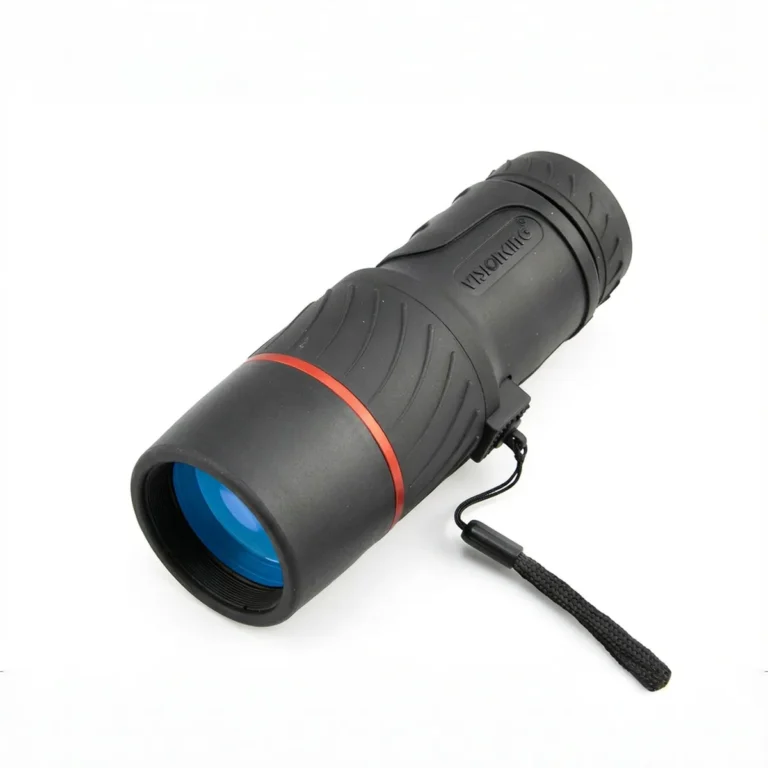
When we discuss PVS night vision, the conversation often revolves around the image intensifier tube. However, the optical glass is equally critical. You can have the highest specification Gen 3 tube available, but if it is paired with inferior lenses, the performance will be bottlenecked. The objective lens and eyepiece act as the gatekeepers for the image. High-quality glass ensures that the Optical Resolution generated by the intensifier reaches your eye without distortion or \”fish-eye\” effects. Just as a Visionking large lens monocular relies on premium glass for crisp daytime clarity, your night vision setup demands precision optics to maintain edge-to-edge sharpness in low-light conditions.
Light Transmission and Lens Coatings
Glass clarity is only half the battle; light transmission is the other. In a night vision PVS system, every photon counts. We rely on specialized lens coatings to minimize reflection and maximize the amount of light that actually hits the photocathode.
- Anti-Reflective Coatings: These prevent light from bouncing off the glass surface, ensuring it passes through to the tube.
- Spectral Matching: High-end Military Spec Optics are coated specifically to transmit the wavelengths of light that night vision tubes are most sensitive to, including near-infrared (NIR).
Durability: The Role of the Housing
The \”PVS\” designation implies a specific standard of ruggedness. The housing is the armor that protects the delicate internal electronics. Whether you are dealing with modern kits or maintaining legacy gear like the PVS-4 night vision weapon sight or the vintage PVS-5 night vision goggle, the physical shell is vital for longevity.
A robust Night Vision Housing Kit provides three key protections:
- Nitrogen Purging: This is essential for preventing internal fogging. By replacing the air inside the optic with dry nitrogen, we ensure the view remains clear even when moving between extreme temperatures.
- Impact Resistance: The housing absorbs the shock from drops or recoil, protecting the tube\’s alignment.
- Environmental Sealing: Proper O-ring seals keep moisture, dust, and debris away from the high-voltage components, a standard that has evolved from the early days of PVS 5 night vision systems to today\’s modular units.
Practical Applications & Setup for PVS Night Vision
Getting your pvs night vision unit is just step one. How you configure it determines how effective you are in the dark. Whether you are running a standard PVS-14 or an older PVS-7, the setup changes drastically based on whether you are hiking, hunting, or conducting tactical operations.
Helmet Mounting Essentials
For most users, hands-free operation is the ultimate goal. To achieve this, you need a solid Tactical Helmet Mount system that integrates with your gear.
- The Interface: You typically need a \”J-Arm\” to connect a monocular like the PVS-14 to the mount assembly. This allows you to align the unit with your dominant eye.
- The Mount: The \”Rhino\” mount is the standard issue swing arm that attaches to the helmet shroud. It allows you to flip the optic up and out of the way when not in use.
- Stability: Ensure everything is locked down tight. A wobbly mount leads to severe eye fatigue and headaches during long movements.
Weapon Mounting and Aiming
Mounting night vision pvs systems directly to a rifle is a popular option, but you have to be careful. While the housing is durable, heavy recoil can damage the internal intensifier tube over time.
- Passive Aiming: This involves looking through your day optic while wearing your NVGs. You need a night-vision-compatible red dot or holographic sight for this to work effectively.
- Active Aiming: This uses an IR Illuminator and infrared laser mounted on the weapon. You aim using the laser beam, which is only visible under night vision.
- Scope Pairing: If you are setting up a dedicated night rig, understanding how to choose custom rifle scopes with specific features is vital for ensuring your optic works well with clip-on night vision devices.
Handheld and Lanyard Use
Sometimes you don\’t need the bulk of a helmet. For Low Light Surveillance, casual hiking, or quick scouting, using the unit handheld is perfectly fine.
- Retention: Always use a lanyard around your neck. PVS night vision units are expensive precision instruments; you do not want to drop one on a rock in the dark.
- Portability: This is the lightest way to travel. It allows you to quickly scan an area without the weight and fatigue associated with a full helmet setup.
Maintenance and Care for PVS Systems
Owning a pvs night vision system means committing to a strict maintenance routine. These devices are built to be rugged, but the internal components—specifically the tubes and lenses—are sensitive precision instruments. If you treat your gear right, it will last a lifetime; if you get lazy, you will end up with an expensive paperweight.
Preventing Tube Damage and Burn-In
The Image Intensifier tube is the heart of your device and the easiest part to destroy. \”Burn-in\” occurs when the unit stares at a bright light source for too long, leaving a permanent dark spot or \”blem\” in your field of view.
- Avoid Bright Light: Never turn your unit on in daylight without the daylight cover (pinhole cap) secured.
- Watch for Lasers: Be careful with IR lasers; staring into a reflection can damage the photocathode.
- Stationary Sources: Do not leave the device running while pointing at a static light source. This applies to modern systems as well as older units like the pvs 4 night vision sight.
Proper Storage Protocols
I cannot stress this enough: remove the batteries when you are not using the unit. Leaking alkaline batteries are the number one cause of death for Night Vision Goggles.
- Battery Removal: Take them out every single time you stow the gear to prevent corrosion on the contacts.
- Environment: Store the housing in a cool, dry place. High humidity is the enemy of electronics.
- Nitrogen Purging: If your housing cracks or the O-ring seals fail, you lose the nitrogen purge, which leads to internal fogging during temperature shifts.
Cleaning Coated Optics
The glass on Military Spec Optics is coated to maximize light transmission. Scrubbing it with a rough cloth or a dirty shirt will strip these coatings and scratch the lens, ruining the clarity.
- Dust First: Always use compressed air or a soft brush to remove grit before wiping.
- Lens Paper: Only use proper lens tissue or a clean microfiber cloth designed specifically for optics.
- Chemicals: Avoid harsh solvents. A dedicated lens cleaning solution is best.
Whether you are running a brand new white phosphor setup or maintaining a vintage pvs 5 night vision goggle, these rules are non-negotiable. Proper care ensures your night vision equipment remains combat-ready and retains its value for years to come.
FAQs about PVS Night Vision
Navigating the world of pvs night vision can be tricky with so many specs and model numbers floating around. I’ve gathered the most common questions I get from users to help you make the right call for your tactical or recreational needs.
Which PVS model suits my needs best?
Your choice depends entirely on your mission profile. If you need versatility—switching between helmet-mounted, handheld, and weapon-mounted roles—the PVS-14 Monocular is the industry standard. It allows you to keep one eye adapted to natural darkness. For static observation or driving where you want both eyes covered (though sharing one tube), the AN/PVS-7 Bi-ocular is a classic choice, though it lacks the depth perception of dual-tube systems. While older legacy tech like pvs 4 night vision scopes or pvs 5 night vision goggles are interesting for collectors, modern users are better served by a versatile night vision monocular that utilizes current technology for better clarity and weight management.
How to interpret Gen 2+ vs Gen 3 specs?
Don\’t just assume \”Gen 3\” is automatically better for every scenario. While a Gen 3 Image Intensifier typically offers better sensitivity in extremely low light, a high-spec Gen 2+ tube can rival standard Gen 3 performance at a lower cost.
- Figure of Merit (FOM): This is your main benchmark. It is calculated by multiplying resolution by the Signal-to-Noise Ratio. A higher FOM means a clearer image.
- SNR: A higher Signal-to-Noise Ratio means less \”static\” or snow in the image during low-light conditions.
What makes White Phosphor better?
White Phosphor Technology (WP) has largely overtaken traditional green phosphor in high-end setups. The black-and-white image creates better contrast and shapes, which the human brain processes faster than green. This results in significantly less eye fatigue during long sessions of Low Light Surveillance. If you are using night vision pvs systems for hours at a time, WP is worth the premium.
How important is lens quality?
You can have the best intensifier tube in the world, but if your glass is cheap, your image will suffer. Military Spec Optics ensure that light transmission is maximized and distortions are minimized. High-quality lenses are essential for achieving the stated Optical Resolution of your device. If you are looking for a setup that balances glass quality with performance, reliable night vision binoculars are often a great alternative to building a custom kit from scratch.
Can I mount PVS on any helmet?
Mostly, yes. A standard Tactical Helmet Mount usually fits into a universal shroud found on most bump and ballistic helmets. You will need a specific interface, like a J-Arm for a monocular or a Rhino mount, to connect the optic to the helmet. This setup is crucial for hands-free operation and allows for Passive Aiming through a red dot sight.
How to avoid premature tube damage?
The biggest enemy of any night vision pvs system is bright light.
- Burn-in: Never point the device at the sun, lasers, or bright streetlights. This leaves permanent black spots.
- Auto-gating: While an Auto-gated Power Supply helps protect the tube by rapidly switching the voltage on and off during light spikes, it is not a license to abuse the sensor.
- Battery Safety: Always remove the battery during storage to prevent corrosion.
Where to find quality aftermarket parts?
Whether you are maintaining a vintage pvs 5 night vision goggle or upgrading a modern unit, stick to reputable suppliers for your Night Vision Housing Kit. Cheap knock-off housings often lack proper nitrogen purging, leading to internal fogging when the temperature drops.