
Understanding Lightweight Rifle Scopes
What is considered a lightweight rifle scope?
A lightweight rifle scope is typically defined by a streamlined design that prioritizes essential optical performance while minimizing mechanical bulk. In many cases, the most significant weight savings come from the parallax system. While long-range optics utilize complex Side Focus or Adjustable Objective (AO) mechanisms to align the reticle and target focal planes, a truly lightweight optic often employs a Fixed Parallax system. By removing the external adjustment dials and internal lens assemblies required to correct parallax at varying distances, these scopes offer a slimmer profile and reduced mass, making them ideal for hunters who value mobility over adjustable features.
How much does a typical lightweight scope weigh?
The weight of a scope is directly influenced by the complexity of its internal mechanics. Scopes equipped with Side Focus turrets—located on the left side of the housing opposite the windage cap—or bulky Adjustable Objective bells naturally weigh more due to the added components needed to move the internal focal plane.
- Fixed Parallax Models: These are generally the lightest options, as the parallax is factory-set (commonly at 100 or 150 yards) and require no extra knobs or heavy glass elements for adjustment.
- Adjustable Models: Adding a side focus wheel or AO ring increases the overall footprint and weight, a trade-off necessary only for shooters requiring precise parallax elimination at extreme distincts.
The advantages of a compact optic for hunting and trekking
Choosing a lightweight rifle scope significantly reduces fatigue during long treks, but it requires the shooter to understand optical mechanics. A compact scope with Fixed Parallax eliminates the need to fiddle with adjustment dials in the field, allowing for faster target acquisition. However, because the parallax is fixed, the shooter must maintain consistent eye placement.
- Simplicity: Fewer knobs mean fewer things to adjust under stress.
- Efficiency: Without a parallax dial, the shooter relies on the \”head-bob\” method to verify alignment, ensuring the reticle does not appear to move or \”swim\” across the target.
- Balance: A lighter optic maintains the natural balance of a mountain rifle, preventing it from becoming top-heavy.
Key Features and Performance Standards
Durability and shock resistance in compact designs
When we engineer a lightweight rifle scope, reducing weight cannot come at the cost of structural integrity. A scope must withstand the recoil of high-caliber rounds and the physical abuse of mountain hunting. We focus on materials like aircraft-grade aluminum to shave ounces while maintaining a rigid chassis. The internal components, particularly the erector system, must be shock-proof to ensure the point of impact doesn\’t shift after a drop or heavy recoil.
- Material: High-grade aluminum alloy for strength-to-weight ratio.
- Construction: One-piece tube designs (often 1 inch or 30mm) increase rigidity.
- Testing: Must pass recoil simulation to guarantee zero retention.
Low-light performance and lens coatings
In a compact optic, the objective lens is often smaller to save weight, which makes glass quality and coatings critical for low-light performance. To ensure a bright image during dawn or dusk, we rely on premium lens coatings that maximize light transmission. While a massive objective bell lets in more light, it adds significant bulk. A high-quality lightweight rifle scope balances a modest objective size with superior glass to maintain clarity without the \”heft.\”
Capped vs. exposed turret systems
Selecting the right turret system is a major factor in the total weight and profile of the scope. For a dedicated lightweight build, we often prefer capped turrets. They are lower profile, lighter, and prevent accidental adjustments while trekking.
However, long-range shooters may need exposed turrets for rapid dialing. This often introduces the need for parallax adjustment. As noted in technical specifications, scopes can have Fixed Parallax (usually factory-set at 100 or 150 yards) or adjustable systems.
| Feature | Description | Weight Impact |
|---|---|---|
| Fixed Parallax | Factory set (100/150 yds). No adjustment dials. | Lightest |
| Adjustable Objective (AO) | Adjustment ring on the objective bell. | Moderate |
| Side Focus | Dial on the side of the turret housing. | Heavier |
Choosing a scope with Fixed Parallax eliminates the extra mechanics of a Side Focus or AO system, making it the ideal choice for pure weight savings, provided your target range aligns with the factory setting.
First Focal Plane (FFP) vs. Second Focal Plane (SFP)
The choice between FFP and SFP affects both the utility and the internal complexity of the optic.
- Second Focal Plane (SFP): The reticle stays the same size regardless of magnification. These designs are generally simpler and lighter, making them the standard for most lightweight hunting scopes.
- First Focal Plane (FFP): The reticle scales with magnification. While excellent for holdovers at any zoom range, the internal mechanism can add slight weight and complexity.
For the ultimate lightweight rifle scope, an SFP design combined with a simple reticle often provides the best balance of performance and portability.
Top-Rated Lightweight Rifle Scopes by Category
When you are counting ounces for a backcountry trip, picking the right glass is critical. I’ve broken down the top contenders to help you find the best lightweight rifle scope for your specific setup.
Best overall lightweight hunting scope
For the dedicated hunter, the Leupold VX-3HD 4.5-14×40 CDS-ZL is hard to beat. Weighing in at just over 13 ounces, it is the gold standard for a lightweight scope for mountain rifle builds. It offers excellent twilight management and a custom dial system without adding bulk.
- Weight: ~13.4 oz
- Tube Size: 1 inch
- Best For: Deer and Elk hunting in steep terrain.
Best for long-range and competition shooting
Long-range usually means heavy, but the Nightforce NX8 2.5-20×50 defies that rule. It packs massive magnification and First Focal Plane (FFP) performance into a package that is significantly lighter than traditional competition scopes. It tracks perfectly, which is non-negotiable when you are dialing for elevation at 800 yards.
Best budget-friendly compact optics
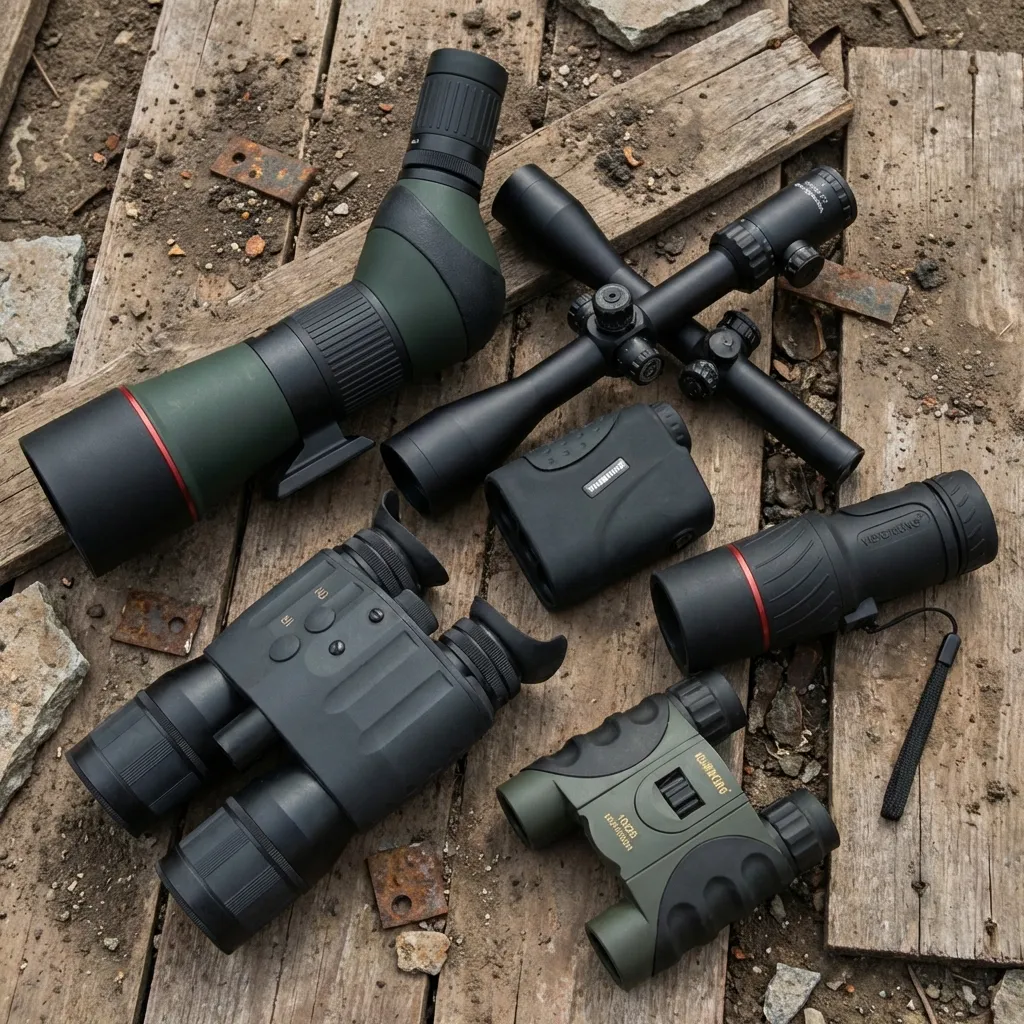
You don\’t need to spend thousands to get a reliable light weight rifle scope. Brands like Burris and Vortex offer compact models like the Droptine or Diamondback series that hold zero reliably. If you are looking to expand your capabilities into the dark without buying a heavy dedicated thermal unit, adding a Visionking Night Vision 3×42 infrared scope to your kit is a smart, cost-effective way to handle low-light pest control.
Best Low Power Variable Optics (LPVO) for weight savings
If you hunt in thick brush or need speed, an LPVO is your best friend. The Trijicon Credo HX 1-6×24 is a top-tier choice here. It allows for shooting with both eyes open at 1x and provides enough magnification for mid-range shots, all while keeping the rifle balanced and fast to shoulder.
Choosing the Right Magnification and Type
Selecting the correct magnification is a balancing act between visual capability and physical bulk. As magnification increases, the internal lens assemblies typically get larger and heavier. To maintain a truly lightweight rifle scope setup, you must be realistic about your engagement distances and choose a magnification range that fits your specific hunting or shooting style.
Low Power Variable Optics (LPVO) for close range
For shooters operating primarily within 300 yards, an LPVO (Low Power Variable Optic) is often the most efficient choice. These scopes, typically in 1-4x, 1-6x, or 1-8x configurations, offer a wide field of view and allow for rapid target acquisition.
- Speed: At 1x, you can shoot with both eyes open, similar to a red dot.
- Weight: Many LPVOs are inherently compact, keeping the center of gravity low on the rifle.
- Application: Ideal for driven hunts, tactical carbines, and dense brush environments.
While some tactical LPVOs can be heavy due to ruggedized housing, a purpose-built lightweight rifle scope in this category can weigh as little as 10 to 14 ounces, making your rifle incredibly handy in dynamic situations.
Medium Power Variable Optics (MPVO) for versatile hunting
The 2-10x, 3-9x, and 4-12x ranges represent the \”sweet spot\” for the vast majority of hunters. This category offers enough magnification for precise shots out to 500 yards while maintaining a manageable exit pupil for low-light performance.
- Versatility: Capable of handling both close-range jump shooting and mid-range static shots.
- Balance: These optics usually feature 40mm to 44mm objective lenses, striking a perfect balance between light transmission and weight.
For general-purpose use, this is often where you will find the best lightweight rifle scope options. Since you are likely covering varied terrain, pairing your optic with a compact hunting rangefinder ensures you can accurately gauge distance without adding significant bulk to your gear loadout.
High Power Variable Optics (HPVO) for mountain hunting
Mountain hunting is the ultimate test for weight savings. When you are hiking thousands of vertical feet, every ounce counts. However, open country requires higher magnification, typically in the 4-16x or 5-25x range, to identify game across canyons.
- The Challenge: High magnification usually means heavy glass and large 50mm+ objectives.
- The Solution: Look for a lightweight scope for mountain rifle builds that utilizes a 1-inch or 30mm tube and keeps the objective lens reasonable (around 44mm or 50mm max) to shave weight.
In these scenarios, precision is non-negotiable. Because judging distance across valleys is notoriously difficult, carrying a reliable 1000m laser rangefinder is essential to maximize the effectiveness of your high-magnification optic.
Top Brands for Lightweight Optics
When I’m looking to shave ounces off a build, the brand on the box tells me a lot about what to expect regarding glass quality, durability, and actual weight versus advertised weight. Not all manufacturers prioritize weight reduction the same way. Some focus on thinning the tube walls, while others use lighter alloy blends. Here is how the market stacks up when you are hunting for the best lightweight rifle scope.
Premium tier: Leupold and Swarovski
If budget isn\’t your main concern and you need the absolute lightest options with world-class glass, this is where you look. Leupold has practically defined the lightweight rifle scope category for American hunters. Their VX-3HD and Ultralight series are incredibly light, often coming in under 12 ounces while still maintaining ruggedness. I’ve found that Leupold scopes are often the go-to for a dedicated lightweight scope for mountain rifle setups where every gram counts during a steep ascent.
Swarovski, on the other hand, dominates when you need optical perfection. Their Z3 and Z5 lines manage to pack incredible zoom ranges and low-light performance into 1-inch tubes that remain surprisingly light. You are paying for the coatings and the engineering that allows a compact optic to perform like a much larger one at dusk.
Mid-range performance: Burris and Bushnell
For the majority of shooters, the mid-range offers the sweet spot between performance and price. Burris and Bushnell have been making reliable optics for decades. I appreciate that brands like these focus on durability. A light weight rifle scope in this category, like the Burris Fullfield or the Bushnell Elite series, might weigh an ounce or two more than the premium tier, but they are built to take a beating.
These brands often feature capped turrets and simple reticles, which helps keep the weight down and reliability up. If you are looking for versatile optical solutions that don\’t require a second mortgage, this tier provides excellent value. They offer a great balance, ensuring you aren\’t carrying a brick on your receiver, but you also aren\’t terrified of scratching the finish.
Value and budget options: Monstrum and Athlon
The budget market has changed drastically in recent years. It used to be that \”cheap\” meant \”heavy and fragile,\” but companies like Monstrum and Athlon are challenging that. They utilize modern manufacturing to produce compact optics that are accessible to everyone.
- Monstrum: Known for bringing tactical features like FFP and illuminated reticles into affordable, compact packages.
- Athlon: Their Neos and Talos lines offer decent glass and lightweight designs perfect for rimfire or entry-level hunting rifles.
While you might sacrifice a bit of edge-to-edge clarity compared to a Swarovski, these brands allow you to outfit a truck gun or a backup rifle with a functional lightweight rifle scope without breaking the bank. It is all about matching your expectations to the price point.
Buyer’s Guide: How to Select the Best Scope
Selecting the right optic isn\’t just about picking the lightest model on the shelf. You need to balance weight savings with the optical performance required for your specific shooting environment. Here is how to navigate the technical specs to find the best lightweight rifle scope for your rig.
Determining your ideal magnification range
Magnification directly impacts the physical weight of the scope. Higher magnification ranges typically require more glass and longer tubes, which adds ounces. For hunters operating primarily at close to mid-range, a Low Power Variable Optic (LPVO) is often the superior choice for weight reduction. A compact 1.25-5×26 rifle scope for hunting provides sufficient zoom for most ethical shots without the bulk of a long-range sniper system.
However, if you push magnification higher, you introduce the need for parallax correction. At higher powers, target and reticle focal planes must align perfectly. This often necessitates an adjustable parallax system, which adds weight compared to a fixed parallax scope.
Matching the scope weight to your rifle build
When building a lightweight scope for mountain rifle setups, you must decide between Fixed Parallax and Adjustable Parallax models. This is a critical weight factor:
- Fixed Parallax: These scopes are factory-set, usually at 100 or 150 yards. They are significantly lighter because they lack the internal lens mechanisms and external dials required for adjustment. They are ideal for standard hunting distances where speed and low weight are priorities.
- Adjustable Parallax: Essential for precision at varying distances. While heavier, they allow you to eliminate the optical illusion where the reticle \”swims\” on the target. If you need this versatility, look for a 1-10×28 rifle scope with military reticle that balances a broad magnification range with a manageable footprint.
Evaluating custom dial systems and reticle types
The mechanism used to adjust parallax and focus also changes the profile of the scope. If you opt for an adjustable model, you generally have two choices:
- Adjustable Objective (AO): The adjustment ring is located on the objective bell (the front of the scope). This is often lighter and simpler but can be harder to reach from a shooting position.
- Side Focus: A dial located on the side of the turret housing, opposite the windage knob. This is more ergonomic for quick adjustments but typically adds more weight and bulk to the turret cluster.
For a lightweight rifle scope, simple capped turrets and a fixed parallax system remain the gold standard for shedding ounces. However, if you require long-range precision, ensure you are comfortable with the \”head-bob\” method to check alignment or accept the slight weight penalty of a side-focus system to ensure your reticle and target are on the same focal plane.
Frequently Asked Questions
Are lightweight scopes less durable than standard scopes?
Many hunters worry that shaving ounces means sacrificing strength, but that is rarely the case with high-quality optics. A premium **lightweight rifle scope** is typically built from aircraft-grade aluminum, designed to handle the same recoil and field abuse as heavier tactical models. The weight savings usually come from a streamlined design, smaller objective lenses, and simplified turret systems rather than thinner tube walls. However, always ensure the scope is rated for your specific caliber, especially if you are mounting it on a heavy-recoil magnum rifle.
Can I use a lightweight scope for long-range shooting?
Yes, you absolutely can. Modern engineering allows for excellent tracking and glass quality in smaller packages. While you might not get the massive 34mm main tube or 56mm objective lens found on dedicated benchrest optics, a **lightweight scope for mountain rifle** setups often features magnification ranges like 4-16x or 3-15x, which is plenty for shots out to 800 yards or more.
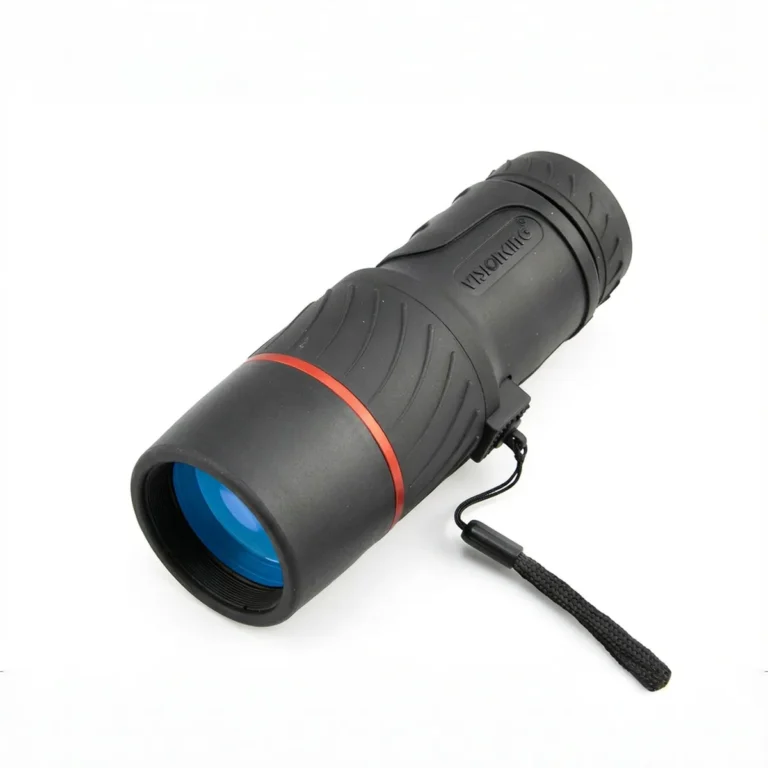
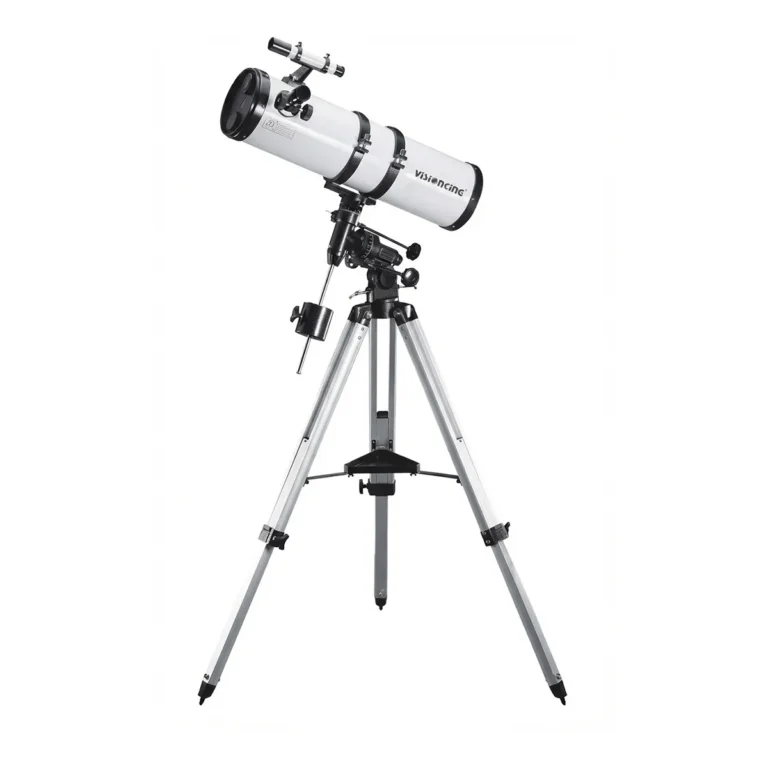
The main challenge at long range is spotting your own trace and impacts with a smaller objective lens. For those extended range sessions, having a separate Visionking 60-350mm refractor astronomical telescope monocular spotting scope nearby allows you to verify your accuracy without adding bulk to the rifle itself.
What are the trade-offs of choosing a compact rifle scope?
When you opt for a **light weight rifle scope**, you are prioritizing mobility, but there are a few compromises to be aware of compared to heavy tactical optics:
- Tighter Eye Box: Compact scopes often require more precise eye placement to get a clear sight picture.
- Low-Light Performance: Smaller objective lenses (e.g., 40mm or 42mm) gather slightly less light at dusk than massive 56mm objectives.
- Adjustment Range: Shorter, lighter tubes may have less internal elevation travel, which can limit how far you can dial for extreme distances.