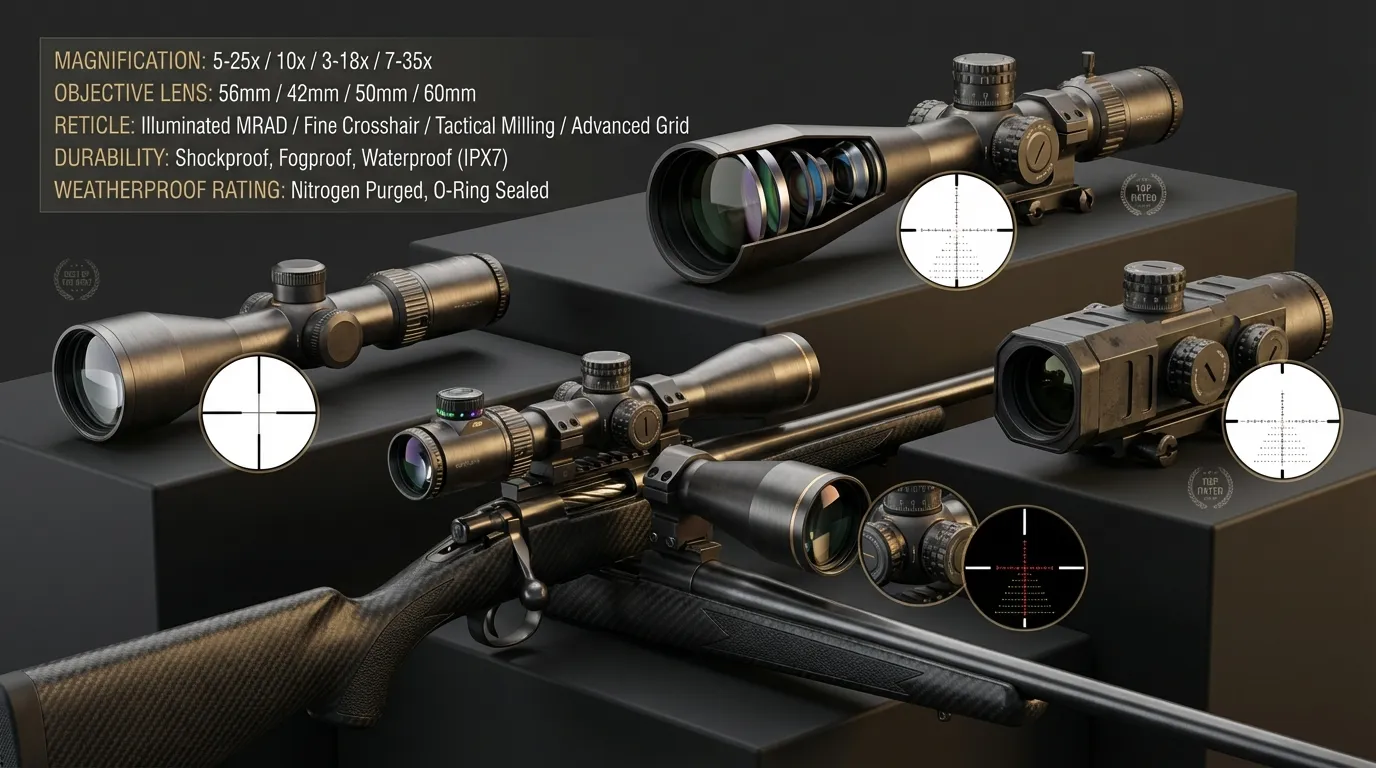
What to Look for in the Best Rifle Scopes
Selecting the best rifle scope is just as critical as choosing the rifle itself. A high-performance precision rifle is severely limited if paired with sub-par optics. When evaluating a top rifle scope for long-range applications, the focus must be on mechanical reliability, optical clarity, and system synergy. You are not just buying a magnifying glass; you are investing in a precision instrument that must withstand recoil and track perfectly over thousands of adjustments.
Understanding First Focal Plane (FFP) vs. Second Focal Plane (SFP)
For long-range precision and tactical applications, the industry standard has shifted decisively toward First Focal Plane (FFP) optics. The primary difference lies in how the reticle behaves relative to the magnification setting.
| Feature | First Focal Plane (FFP) | Second Focal Plane (SFP) |
|---|---|---|
| Reticle Behavior | Grows or shrinks as you zoom in or out. | Remains the same size regardless of magnification. |
| Subtension Validity | Markings are accurate at all magnification levels. | Markings are accurate only at a specific setting (usually max power). |
| Primary Advantage | Allows for accurate holdovers and ranging at any zoom level. | Reticle remains highly visible even at the lowest magnification. |
For a good rifle scope intended for distances beyond 600 yards, FFP is essential. It ensures that 1 MIL on the reticle equals 1 MIL on the target, whether you are at 5x or 25x magnification.
The Importance of Optical Performance and Lens Clarity
Optical quality dictates your ability to identify targets, read mirage, and spot impacts at extreme distances. The best rifle scope options utilize high-density (HD) or extra-low dispersion (ED) glass to minimize chromatic aberration and maximize light transmission.
- Tube Diameter: Premium scopes often feature 34mm or 36mm main tubes. This larger diameter allows for a greater range of internal elevation adjustment, which is necessary for shooting at 1,000+ yards.
- Objective Lens: Large objective lenses (50mm to 56mm) gather more light, providing a brighter image in low-light conditions and a larger exit pupil for easier eye alignment.
- Resolution: Clarity is paramount. You must be able to resolve bullet holes or steel impacts clearly to make necessary corrections.
Capped vs. Exposed Turrets for Different Shooting Styles
The turret system is the mechanical heart of the scope. For precision shooting, exposed \”tactical\” turrets are preferred over capped designs found on traditional hunting scopes.
- Tracking Reliability: The most vital attribute of any scope is tracking. If you dial 5 MILs of elevation, the internal mechanics must move the point of aim exactly 5 MILs.
- Zero Stop: A mechanical Zero Stop is a non-negotiable feature for long-range optics. It allows you to dial back down to your original zero blindly after taking a long shot, ensuring you never lose your baseline.
- Tactical Turrets: These allow for rapid, visible adjustments to windage and elevation without removing caps, essential for dynamic shooting scenarios.
Best Overall Rifle Scopes for 2026
Top Picks for All-Around Versatility
When identifying the **best rifle scope** for versatility, we prioritize optics that can transition seamlessly from mid-range tactical applications to extreme long-range precision. In my professional experience, a scope must offer a broad magnification range and, crucially, a First Focal Plane (FFP) reticle. The **Nightforce ATACR 7-35×56** is a standout in this category. It provides distinct clarity at lower magnifications for target acquisition while offering the power needed to identify impacts at 1,000 yards and beyond. Another top contender is the **Vortex Razor HD Gen III**, which balances a massive field of view with rugged durability. These optics feature \”Christmas Tree\” style reticles, allowing shooters to hold for wind and elevation efficiently without touching the turrets, a mandatory feature for any serious versatile setup.
Best Performance for the Price
In the world of precision shooting, \”value\” is defined by mechanical reliability rather than just the lowest price tag. A **good rifle scope** must track perfectly—meaning if you dial 10 Mils up, the reticle moves exactly that amount and returns to zero every time. While top-tier glass commands a premium, there are options that bring essential tactical features to a more accessible level. For shooters needing critical features like a Zero Stop and FFP without the investment-grade price of European glass, the Visionking 2.5-20×50 FFP Rifle Scope with Zero Stop offers a robust platform for field use. However, if you are looking at the mid-to-high market, the **Leupold Mark 5HD** offers incredible performance for the price, providing a lighter weight chassis and excellent glass that competes with scopes costing significantly more.
Highest Rated Precision Scopes
For pure competition and extreme distance, the **top rifle scope** models are judged by their optical resolution and turret precision. The **Schmidt & Bender PM II** series has long been the benchmark for durability and optical brilliance in the tactical community. Similarly, the **Kahles K525i** is highly rated for its unique ergonomic layout, placing the parallax adjustment under the elevation turret for ambidextrous use. These scopes typically utilize large main tubes—often 34mm or larger—to maximize elevation travel. To get the most out of these heavy-duty optical systems, securing them with high-quality mounting solutions, such as 35mm Rifle Scope Rings, is essential to maintain zero under heavy recoil. These precision instruments are designed to eliminate variables, ensuring that if you miss, it is the shooter, not the optic.
Best Budget Rifle Scopes Under $500
Finding the best rifle scope on a tight budget requires a strict focus on mechanical fundamentals. While professional instructors often recommend spending as much on your glass as you do on your rifle, we understand that not every shooter starts with a multi-thousand dollar budget. In this price range, you must prioritize mechanical reliability—specifically the scope\’s ability to hold zero and track correctly—over fancy features or crystal-clear edge-to-edge glass. If the internal gears don\’t move the reticle precisely, the optic is useless regardless of the price tag.
Top Value Picks for Big Game Hunting
For general hunting applications where shots are typically taken within 300 to 400 yards, you can sacrifice some magnification power for better durability and simplicity. A good rifle scope for this purpose doesn\’t necessarily need exposed tactical turrets or complex grid reticles. Instead, look for a robust main tube and a simple, uncluttered reticle that is visible in lower light.
When selecting a budget optic for the field, consider these factors:
- Simplicity: A Second Focal Plane (SFP) scope is often sufficient for hunting and helps keep costs down while maintaining a clear sight picture.
- Durability: Ensure the scope is nitrogen-purged and rated for recoil, especially if you are mounting it on a larger caliber rifle.
- Versatility: A Low Power Variable Optic (LPVO) like the Visionking 1.25-5×26 rifle scope offers a wide field of view for close encounters while providing enough zoom for mid-range ethical shots.
Best Entry-Level Long Range Scopes
Entering the world of long-range precision shooting usually demands a higher investment, but you can find a top rifle scope under $500 if you know what to look for. Unlike hunting scopes, long-range optics require exposed turrets for dialing elevation and windage. The most critical feature here is \”tracking\”—the ability of the scope to adjust up and down and return exactly to zero.
To get the most out of a budget precision scope:
- Magnification: You generally want a higher magnification range to identify targets at distance. A Visionking 10-40×56 hunting rifle scope provides the substantial zoom capabilities needed for seeing impacts on steel at extended ranges.
- Focal Plane: Try to find a First Focal Plane (FFP) model. This ensures your reticle subtensions (the hash marks used for measuring) remain accurate at any magnification level, which is essential for making corrections without doing mental math.
- Turrets: Look for turrets that have distinct, audible clicks. Mushy turrets make it difficult to dial in precise adjustments in the field.
Most Durable Affordable Optics
Durability is the biggest challenge for affordable optics. A cheap scope that loses its zero after a few shots is a liability. When evaluating the best rifle scope in the budget tier, pay close attention to the construction materials. A 30mm main tube is generally stronger and allows for more internal adjustment range compared to the older 1-inch standard.
Key indicators of a durable budget scope include:
- Shockproof Rating: The manufacturer should explicitly state the recoil rating.
- Waterproofing: O-ring seals and nitrogen or argon purging prevent internal fogging during temperature changes.
- Warranty: A strong warranty is often a sign that the manufacturer trusts the mechanical integrity of their product.
Best Rifle Scopes for Hunting
When you are miles deep in the wilderness, your optic is the link between your rifle and the game. The best rifle scope for hunting must balance rugged durability with optical clarity. Based on professional instruction, we know that a failure in mechanical tracking or a shift in zero can ruin the hunt of a lifetime. We prioritize scopes that hold zero through rough handling and deliver a clear image when the pressure is on.
Lightweight Scopes for Backcountry Hunting
In the backcountry, every ounce counts, but you should never sacrifice reliability for weight. While competition scopes often feature heavy 34mm or 36mm tubes, the best hunting rifle scope for mountain use often utilizes a lighter chassis while maintaining robust internals.
- Durability: The scope must withstand recoil and physical impact without losing zero.
- Glass Quality: High-definition (HD) or Extra-low Dispersion (ED) glass allows for a lighter optical system without compromising clarity.
- Magnification: A moderate range, such as 3-15x or 4-16x, usually offers the perfect balance for weight savings and versatility.
Best Low-Light Performance for Dawn and Dusk
Game animals are most active during the \”golden hours\” of dawn and dusk. To make an ethical shot in these conditions, you need maximum light transmission. The reference data highlights the importance of large objective lenses (50mm to 56mm) and premium glass coatings to pull in available light.
Key Factors for Low-Light Visibility:
- Large Objective Lens: Allows more light to enter the tube.
- Tube Diameter: Larger tubes (30mm+) allow for better internal light management.
- Reticle Visibility: An illuminated reticle is essential for aiming against dark backgrounds.
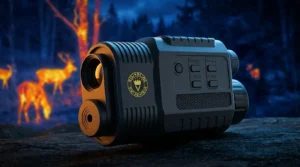
For scenarios where natural light is non-existent, modern hunters sometimes turn to technology. Specialized Visionking night vision infrared scopes can provide visibility well beyond what traditional glass can offer during nocturnal pest control or observation.
Simplified Capped-Turret Options for Field Use
While long-range precision demands exposed \”tactical\” turrets for constant dialing, many hunters prefer the security of capped turrets.
| Feature | Exposed Turrets | Capped Turrets |
|---|---|---|
| Adjustment Speed | Fast dialing for wind/elevation | Slower (must remove caps) |
| Security | Risk of accidental movement | Protected from bumps/snags |
| Best Use | Long-Range/Competition | Stalking/General Hunting |
For a dedicated hunting rig, capped turrets ensure your zero remains locked in as you move through thick brush. However, the internal mechanics must still be \”investment grade.\” Even if you don\’t dial for every shot, the gears inside must hold the reticle precisely in place year after year.
Best Scopes for Long-Range Precision Shooting
When you push your shooting distance past 600 yards, the margin for error disappears. At this stage, the best rifle scope isn\’t just a magnifying glass; it is a precision mechanical instrument. I always tell my customers that long-range shooting is where you stop paying for brand names and start paying for mechanical reliability and optical physics. You need a system that tracks perfectly, returns to zero every single time, and allows you to see bullet trace and mirage clearly.
Top Precision Optics for $1,000 to $2,000
This price bracket is often called the \”sweet spot\” in the optics industry. Here, you get about 90% of the performance of a top-tier alpha scope but keep a few grand in your pocket for ammo. In this range, I expect to see Japanese glass or high-end diverse manufacturing that ensures excellent light transmission.
A good rifle scope in this tier must feature:
- First Focal Plane (FFP): Essential for using holdovers at any magnification.
- Zero Stop Mechanisms: You need to dial back to zero by feel without looking.
- Reliable Tracking: If you dial 10 Mils up, the reticle must move exactly 10 Mils.
Many shooters find that a solid optic in this range serves as the best hunting rifle scope for long-range western hunting as well, offering the durability needed for the field with the precision required for cross-canyon shots. You can find deeper dives into optical engineering and mechanics on our informative optics blog, where we break down what makes these scopes tick.
Professional Tier Scopes Over $2,500
Once you cross the $2,500 threshold, you are entering the realm of professional competition and extreme long-range (ELR) shooting. These are the top rifle scope contenders used by PRS (Precision Rifle Series) pros. At this level, we aren\’t just looking for clarity; we are looking for perfection.
The distinguishing factors here include:
- Chromatic Aberration Control: Zero color fringing, even at max magnification.
- Massive Internal Adjustment: 34mm or 36mm main tubes allowing for 30+ Mils of elevation travel.
- Bombproof Durability: These scopes are built to withstand heavy recoil and accidental drops without losing zero.
While this might be overkill for a standard deer rifle, if your goal is hitting a steel plate at one mile, this investment is non-negotiable.
Reticle Ergonomics and Legible Markings
Glass quality gets all the attention, but the reticle is your user interface. I have seen many high-end scopes ruined by a reticle that is too thick, covering the target at long range, or too thin to see in low light. The best rifle scope for precision work usually utilizes a \”Christmas Tree\” style reticle. This provides holdover points for wind and elevation without touching the turrets.
However, ergonomics matter.
- Floating Dot: A tiny center dot allows for precise aiming without obscuring the bullseye.
- Open Centers: Keeps the view of the impact area clear.
- Legible Numbers: The stadia lines and numbers must be crisp and easy to read under stress.
Whether you are choosing the best rifle scope for hunting or a dedicated benchrest optic, ensure the reticle matches your brain\’s ability to process information quickly. A cluttered view slows you down, while a clean, smart design speeds up your engagement time.
Selecting the Right Magnification for Your Purpose
Choosing the correct magnification range is arguably the most critical decision when buying optics. Many shooters make the mistake of buying \”too much scope,\” assuming higher magnification always equals better accuracy. In reality, the best rifle scope for your setup is one that balances target identification with field of view and exit pupil. I always tell customers to match the glass to the task, not just the budget.
Low Power Variable Optics (LPVO) for Short Range
If you are shooting inside 300 yards, competing in 3-Gun, or hunting dangerous game in thick brush, an LPVO is your best friend. These scopes typically range from 1-4x, 1-6x, or 1-8x.
- True 1x Performance: At the lowest setting, a good rifle scope in this category acts like a red dot, allowing you to shoot with both eyes open for maximum situational awareness.
- Speed: They offer the fastest target acquisition speed.
- Weight: Generally lighter and more compact than high-magnification alternatives.
For tactical applications or driven hunts where the target is moving, an LPVO provides the versatility needed to react instantly.
Mid-Range Magnification for General Hunting
For the vast majority of hunters, the \”Goldilocks\” zone lies in the mid-range. The classic 3-9x or the modern 2.5-10x and 4-16x configurations are widely considered the best hunting rifle scope options for general use.
- Versatility: Low enough power for shots in the timber, but enough zoom to count points on a buck at 400 yards.
- Light Transmission: These scopes usually maintain a larger exit pupil, which is crucial for low-light performance during dawn and dusk.
- Forgiveness: The eye box is generally more forgiving than high-power scopes, making it easier to get behind the glass quickly.
If you are looking for a top rifle scope that can handle 90% of hunting scenarios, stick to this magnification bracket. It prevents \”getting lost in the scope\” when trying to find an animal at close range.
High Power Magnification for Extreme Distances
When you step out past 600 yards or get into precision rimfire matches, you need high magnification—typically 5-25x or even higher. This allows you to see bullet holes on paper and identify small targets at extreme ranges.
However, high magnification amplifies everything, including your heartbeat and heat mirage. Precision at this level requires more than just a scope; you need to know your exact distance. Many long-range shooters pair their high-power optics with a Visionking 6×25 laser range finder to ensure their ballistic calculations are flawless before dialing the turrets.
- Target ID: Essential for distinguishing between targets or spotting impacts.
- Parallax Adjustment: High-power scopes almost always require side focus parallax adjustment to ensure the reticle and target are on the same focal plane.
- Stability: Requires a bipod or shooting bag; these are not designed for off-hand shooting.
How to Evaluate and Test Rifle Scope Quality
When identifying the best rifle scope for precision work, we prioritize mechanical performance over everything else. Many shooters make the mistake of judging an optic solely by how clear the glass looks, but a scope is primarily a mechanical device designed to aim your rifle. If the internal gears fail, the clearest glass in the world won\’t help you hit the target. We rigorously test the internal mechanics to ensure the optic is \”investment grade\” and capable of consistent long-range performance.
Tracking Accuracy and Return to Zero Benchmarks
The most critical test for any good rifle scope is tracking. This refers to the scope\’s ability to move the reticle exactly as much as you dial the turret. If you dial 10 MILs of elevation, the point of impact must shift exactly 10 MILs on the target. We verify this using a \”tall target test\” to ensure the internal adjustments are precise.
Equally important is the \”return to zero.\” After dialing for a long-range shot—perhaps out to 1,000 yards—you must be able to dial back down and have the scope return exactly to its original zero. If a scope fails to track perfectly or return to zero, it is disqualified from being a top-tier precision optic.
- Tall Target Test: Verifies that vertical adjustments match actual bullet impact shifts.
- Box Test: Checks windage and elevation consistency by shooting a square pattern.
- Zero Retention: Ensures the scope holds its setting after repeated dialing and recoil.
Evaluating Reticle Subtensions and Ergonomics
For long-range shooting, the reticle is your ruler. We test to ensure that the hash marks (subtensions) on the reticle are mathematically accurate against a calibrated chart at 100 yards. We strongly prefer First Focal Plane (FFP) systems because the reticle scales with magnification, ensuring that your holdover points are accurate at any power setting.
We also evaluate the usability of the reticle design. A top rifle scope often features a \”Christmas tree\” or grid-style reticle, which allows for precise elevation and windage holds without touching the turrets. When testing a tactical scope with a mil-dot reticle, we confirm that the grid lines are distinct enough to read quickly but fine enough not to obscure small targets at extreme distances.
Build Quality and Environmental Durability
Durability is non-negotiable. A precision rifle system is often heavy and subjected to field abuse. We look for robust main tubes—typically 30mm, 34mm, or even 36mm—which provide greater structural integrity and allow for more internal elevation travel.
- Turret Feel: Clicks should be tactile and audible, not mushy.
- Tube Construction: One-piece aircraft-grade aluminum tubes offer the best rigidity.
- Weather Sealing: The optic must be fog-proof and waterproof to handle changing environmental conditions.
We also check the parallax adjustment to ensure it is forgiving and effective. The best rifle scope options feel solid in the hand and inspire confidence that they will maintain zero even after being jostled during transport or subjected to heavy recoil.
Top Rifle Scope Brands and Reliability
When you are investing in a precision optical system, the name on the tube often tells you a lot about the mechanical reliability inside. In my experience, the best rifle scope is one that you never have to worry about. It holds zero, tracks perfectly, and handles the recoil of heavy calibers without shifting. We aren\’t just paying for a logo; we are paying for the assurance that when we dial 5 MILs of elevation, the internal gears actually move exactly that amount.
Industry-Leading Premium Brands
At the very top of the food chain, we have what I call \”investment grade\” optics. These are the brands you see on the firing lines of professional precision rifle series competitions and in tactical applications.
- Schmidt & Bender: Often considered the gold standard. Their PM II series is legendary for optical clarity and mechanical precision. If you want the absolute top rifle scope for clarity and robust engineering, this is usually the benchmark.
- Nightforce: Specifically the ATACR series. These scopes are built like tanks. They are heavy, but that weight translates to extreme durability. I have seen these scopes take abuse that would destroy lesser optics and still track perfectly.
- Kahles: Known for the K525i, Kahles offers unique ergonomics like top-mounted windage and parallax adjustments. They are favored for their ease of use and exceptional glass quality.
Reliable Mid-Tier Manufacturers
You don\’t always have to spend $4,000 to get a good rifle scope that performs in the field. There is a \”sweet spot\” in the market where performance meets a slightly more accessible price point.
- Vortex Optics: The Razor HD Gen II and Gen III lines are staples in the shooting community. They offer arguably the best value for money in the high-end market, providing features and glass that rival the most expensive European brands.
- Leupold: The Mark 5HD series has been a game-changer. It is significantly lighter than many competitors, making it a best hunting rifle scope candidate for those who also want long-range dialability.
- Bushnell: Their Elite Tactical line (specifically the XRS and DMR models) has proven that you can get reliable tracking and good glass without breaking the bank.
Brands Known for Exceptional Warranty and Support
Even the best engineering can fail under extreme conditions, or accidents happen in the field. That is why warranty support is a critical factor in my buying decision. Vortex Optics is famous for their VIP Warranty—if it breaks, they fix it, no questions asked. This level of support provides peace of mind, especially when you are dragging gear through rough terrain.
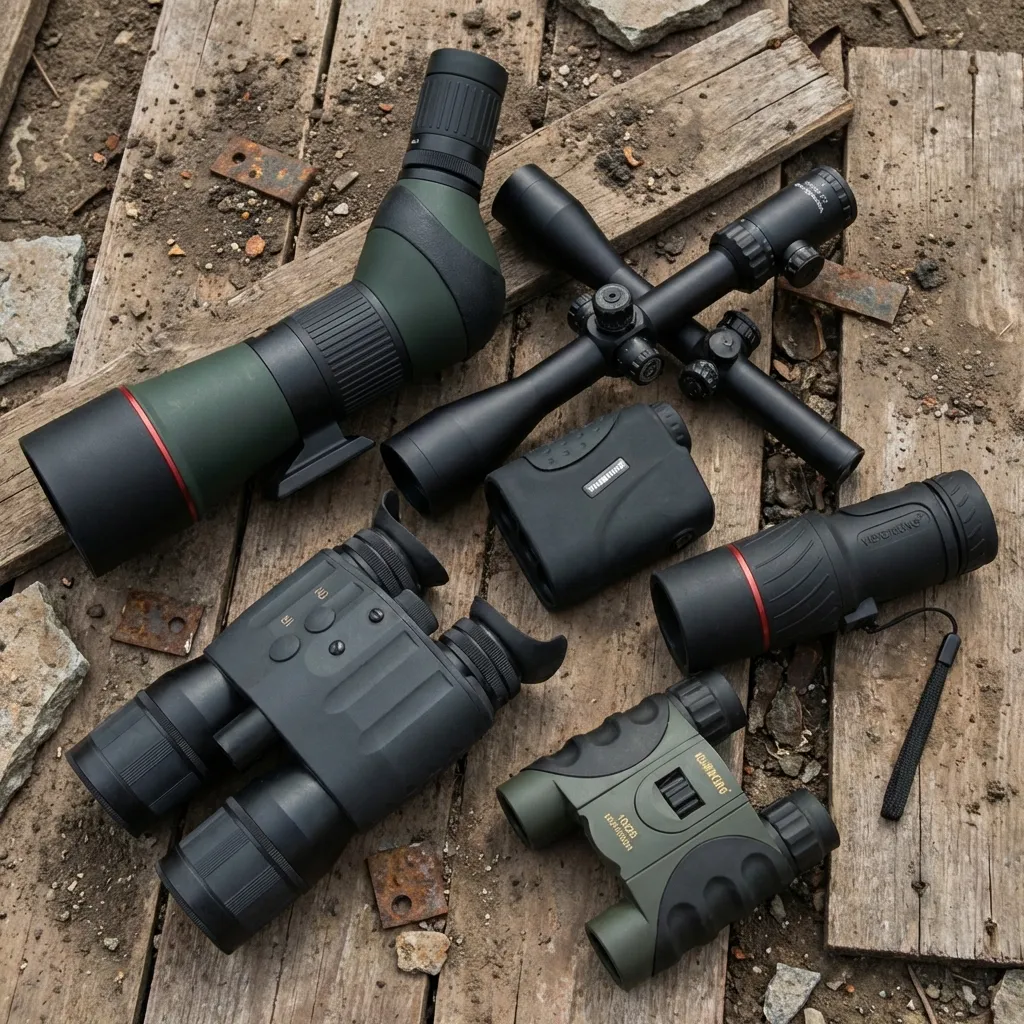
Reliability extends beyond just the rifle optic; it applies to your entire observation system. Many shooters pair their primary optic with a rugged Visionking 20-60×60 waterproof spotting scope to ensure they can spot impacts and make corrections reliably, regardless of the weather. Nightforce and Leupold also maintain stellar reputations for customer service, ensuring that your investment is protected for the long haul.