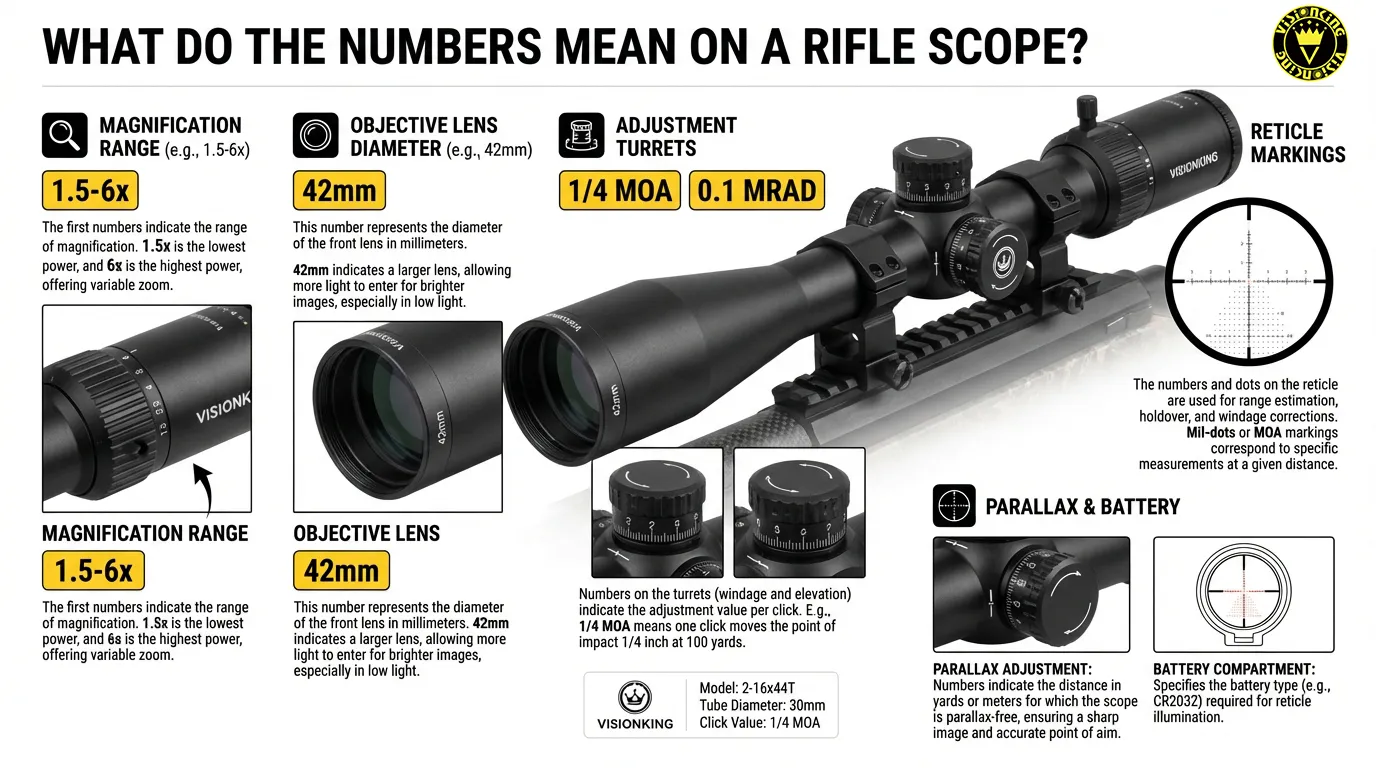
Understanding Rifle Scope Specifications: What the Numbers Mean
When selecting an optic for your firearm, the most common question is: what do the number mean on a rifle scope? These figures are not arbitrary; they are the blueprint for the scope\’s performance capabilities. Understanding this numerical nomenclature is critical for making an informed purchasing decision and ensuring the optic matches your specific shooting requirements, whether for hunting or target practice.
Where to Find the Numbers on Your Scope
You can typically locate the specification numbers printed on the eyepiece housing or the objective bell of the scope. If the scope is new, these numbers are prominently displayed on the packaging. They usually appear in a standard format, such as 3-9×40 or 4×32, which serves as the primary identifier for the model\’s optical power and physical size.
The Basic Format: Magnification and Objective Lens
The numbers are always structured to tell you two specific things: how much the scope magnifies the image and how large the front lens is. The \”x\” in the sequence stands for \”times\” and separates these two distinct specifications.
Breakdown of a Standard Scope (e.g., 3-9×40):
| Component | Number Position | cURL Too many subrequests. |
|---|---|---|
| Magnification | First Number(s) (3-9) | Indicates the zoom level. In this example, the image can be adjusted from 3 times to 9 times larger than the naked eye view. |
| The \”x\” | Middle | Represents \”power\” or magnification factor. |
| Objective Lens | Last Number (40) | The diameter of the front lens in millimeters. This determines how much light enters the scope. |
Why Understanding These Specifications Is Essential for Accuracy
Knowing what do the number mean on a rifle scope goes beyond simple zoom capabilities. These specifications directly impact the physical setup of your rifle and your ability to shoot accurately in various conditions.
- Light Transmission: The objective lens number tells you how bright the image will be. Larger numbers (like 50mm) gather more light for low-light shooting but add weight.
- Mounting Requirements: A larger objective lens diameter requires higher mounting rings to prevent the scope from touching the barrel.
- Field of View: Higher magnification numbers generally reduce your field of view, making it harder to find targets quickly at close range.
- Safety: Understanding specs like eye relief (the distance required between your eye and the scope) is vital to prevent injury from recoil.
Magnification Power: The First Set of Numbers
cURL Too many subrequests. what do the number mean on a rifle scope, cURL Too many subrequests.
cURL Too many subrequests.
cURL Too many subrequests.
- cURL Too many subrequests. cURL Too many subrequests.
- cURL Too many subrequests. cURL Too many subrequests.
cURL Too many subrequests. cURL Too many subrequests. cURL Too many subrequests.
cURL Too many subrequests.
cURL Too many subrequests. cURL Too many subrequests. cURL Too many subrequests.
- cURL Too many subrequests. cURL Too many subrequests.
- cURL Too many subrequests. cURL Too many subrequests.
Knowing cURL Too many subrequests. cURL Too many subrequests.
cURL Too many subrequests.
cURL Too many subrequests. cURL Too many subrequests. cURL Too many subrequests.
- cURL Too many subrequests. cURL Too many subrequests.
- cURL Too many subrequests. cURL Too many subrequests.
cURL Too many subrequests.
cURL Too many subrequests.
cURL Too many subrequests.
cURL Too many subrequests. what do the number mean on a rifle scope, cURL Too many subrequests. cURL Too many subrequests.. cURL Too many subrequests.
cURL Too many subrequests.
cURL Too many subrequests. cURL Too many subrequests. cURL Too many subrequests.
cURL Too many subrequests.
cURL Too many subrequests., cURL Too many subrequests. setups regarding installation? A large objective lens (like 50mm or larger) often requires higher mounting rings to prevent the bell of the scope from touching the rifle barrel. This can alter your cheek weld and shooting comfort, so it is essential to balance light-gathering capability with the practical size and weight limits of your firearm.
Common Examples of Scope Numbers Decoded
When you look at the box, seeing strings of digits can be confusing. Let\’s break down exactly what do the number mean on a rifle scope using the most popular configurations found on the market to clear up the confusion.
What Does 3-9×40 Mean?
This is the classic variable scope configuration. The 3-9 represents the magnification range. You can adjust the setting so the target appears anywhere from 3 times to 9 times larger than it does with your naked eye. The number following the \”x,\” which is 40, stands for the objective lens diameter in millimeters. A 40mm lens is a standard size that effectively balances light transmission with a manageable weight, making it a versatile choice for many shooters.
What Does 6-24×50 Mean?
This set of numbers indicates an optic built for longer distances and detailed observation. The 6-24 means the scope is variable, starting at 6x power and zooming all the way up to 24x. The 50 indicates a large 50mm objective lens. Larger lenses are necessary at high magnification to keep the image bright, similar to the optical physics used in a high-power spotting scope. However, keep in mind that a 50mm lens is heavier and often requires taller mounting rings to ensure the bell of the scope clears the rifle barrel.
Interpreting Fixed Power Scopes like 4×32
Not all scopes zoom. If you see a single number before the \”x,\” like in 4×32, it is a fixed power scope. The 4 means the magnification is locked at 4 power; the image will always appear four times closer. The 32 represents a 32mm objective lens. These scopes are often simpler and lighter because they lack the internal mechanisms required for variable zooming, offering a consistent view every time you shoulder the rifle.
Additional Technical Numbers and Measurements
Beyond the basic magnification and lens size, several other specifications are critical when deciphering what do the number mean on a rifle scope. These measurements directly affect how you mount the optic, how much of the target area you can see, and how safely you can shoot.
Main Tube Diameter: 1-inch, 30mm, and 34mm
The main tube diameter is the measurement of the scope\’s body between the objective bell and the eyepiece. This number does not indicate optical power but is essential for selecting the correct mounting system. The most common sizes are 1-inch (25.4mm) and 30mm, though 34mm is seen in long-range optics. You must match your rings exactly to this diameter; a 30mm tube requires 30mm rings. For versatile mounting options, reliable Visionking rifle scope rings for 25.4mm and 30mm tubes provide the secure fit needed for these standard sizes.
Field of View (FOV) at Different Distances
Field of View (FOV) refers to the width of the area visible through the scope, typically measured in feet at 100 yards. There is an inverse relationship between magnification and FOV:
- cURL Too many subrequests. Provides a wider FOV, allowing you to see more of the environment and locate targets quickly.
- cURL Too many subrequests. Narrows the FOV significantly, isolating the target but reducing situational awareness.
Eye Relief: Safety and Comfort for the Shooter
Eye relief is the specific distance, usually measured in inches, between your eye and the rear lens (ocular lens) required to see a full, clear image. If you are too close or too far, the image will black out around the edges. More importantly, this number represents a safety margin. Adequate eye relief prevents the scope from striking your eye or brow during recoil. Heavy-recoil rifles demand longer eye relief to avoid injury, commonly known as \”scope eye.\”
Turret Adjustments: Understanding MOA and MIL Numbers
The dials on the center of the scope, known as turrets, control Windage (horizontal) and Elevation (vertical) adjustments. Understanding cURL Too many subrequests. cURL Too many subrequests.
- cURL Too many subrequests. cURL Too many subrequests.
- cURL Too many subrequests. cURL Too many subrequests.
| cURL Too many subrequests. | cURL Too many subrequests. | cURL Too many subrequests. |
|---|---|---|
| cURL Too many subrequests. | cURL Too many subrequests. | cURL Too many subrequests. |
| cURL Too many subrequests. | cURL Too many subrequests. | cURL Too many subrequests. |
cURL Too many subrequests.
cURL Too many subrequests.
cURL Too many subrequests. what do the number mean on a rifle scope, cURL Too many subrequests.
cURL Too many subrequests.
cURL Too many subrequests.
- Light Transmission: cURL Too many subrequests.
- cURL Too many subrequests. cURL Too many subrequests.
- cURL Too many subrequests. cURL Too many subrequests.
cURL Too many subrequests.https://visionkingscope.com/portable-visionking-8×40-bak4-monocular-metal-body–
cURL Too many subrequests.
cURL Too many subrequests. what do the number mean on a rifle scope cURL Too many subrequests.
cURL Too many subrequests.
cURL Too many subrequests.
- Objective Lens: cURL Too many subrequests.
- cURL Too many subrequests. cURL Too many subrequests.
- cURL Too many subrequests. cURL Too many subrequests.
cURL Too many subrequests.
cURL Too many subrequests.
- cURL Too many subrequests. cURL Too many subrequests.
- cURL Too many subrequests. cURL Too many subrequests.
- cURL Too many subrequests. cURL Too many subrequests. cURL Too many subrequests. cURL Too many subrequests.
cURL Too many subrequests.
cURL Too many subrequests. cURL Too many subrequests. cURL Too many subrequests.
| Specification | Why It Matters for Your Rifle |
|---|---|
| Eye Relief | The distance between your eye and the lens. High-recoil calibers require longer eye relief (3-4 inches) to prevent the scope from hitting your brow during recoil (\”scope eye\”). |
| Tube Diameter | Common sizes are 1 inch or 30mm. Ensure your mounting rings match this number exactly. |
| Turret Clicks | If you dial for range, ensure the click values (MOA or Mil) match your preferred system for windage and elevation adjustments. |
By matching these numbers to your equipment, you ensure a setup that is safe to shoot and physically fits the rifle without obstruction.
Frequently Asked Questions
What is a good magnification for 100 yards?
For general shooting at this distance, the classic **3-9x** variable power configuration is the industry standard. The lower end (3x) provides a wider field of view to help you locate the target, while the high end (9x) offers enough zoom to see impact points clearly. If you prefer a simpler setup without adjustment dials, a fixed **4x** power scope is also a reliable choice that balances target visibility with situational awareness.
Does a larger objective lens provide a brighter image?
Yes, generally speaking. When deciphering **what do the number mean on a rifle scope**, the number following the \”x\” represents the **objective lens diameter** in millimeters. A larger lens (like 50mm) gathers more light than a smaller one (like 32mm), which results in a brighter image during low-light conditions such as dawn or dusk. However, there are trade-offs to consider:
* **Weight:** Larger lenses add significant bulk to your rifle.
* **Mounting Height:** You may need taller mounting rings to prevent the large bell of the scope from touching the barrel.
How do I choose the right tube size for my rings?
To select the correct rings, you must identify the main tube diameter, which is a separate specification from the magnification or objective lens numbers. The most common tube sizes are **1-inch** and **30mm**, though heavier tactical scopes may use **34mm**. You must purchase rings that match this diameter exactly; a mismatch will either fail to hold zero or crush the scope tube.