
Hitting steel at 1,000 yards isn\’t just about luck. It’s about math, mechanics, and your optic.
But selecting the right long range rifle scope is often a minefield of marketing hype.
You’ve likely debated First Focal Plane (FFP) versus Second Focal Plane.
You’re trying to decide between MIL vs MOA.
And you are wondering if you really need to spend a mortgage payment to get reliable turret tracking accuracy.
In this guide, we’re cutting through the noise.
We are going to break down exactly what features—from zero stop turrets to ED glass—are non-negotiable for precision shooting, and which ones are just expensive fluff.
Here is how to choose professional-grade glass without the massive brand tax.
Let’s get on target.
Turret Tracking and Mechanics: The Engine of the Scope
When I pick up a new long range rifle scope, the first thing I do isn’t look through the glass—I twist the turrets. Why? Because while crystal-clear glass helps you identify the target, it is the internal mechanics that actually allow you to hit it. You can have the best optical clarity in the world, but if your turrets don\’t track true, that expensive optic is nothing more than a heavy spotting scope. The tracking mechanism is the engine of your optic, and for 1000-yard shooting, that engine needs to be precision-tuned.
The Importance of the Box Test for Accuracy
Have you ever dialed a firing solution, taken the shot, missed, and immediately blamed the wind? Before you blame your environmental calls, you need to verify your gear. The \”Box Test\” is the ultimate lie detector for Turret Tracking Accuracy. It proves whether a single click on the turret actually moves the point of impact exactly as much as the manufacturer claims.
Here is how we verify a long range rifle scope using the Box Test:
- Establish Zero: Fire a group at the center of the target.
- Dial Up and Right: Adjust your Windage and Elevation (e.g., 5 MILs Up, 5 MILs Right) and fire.
- Dial Down: Adjust Elevation down (5 MILs Down) and fire.
- Dial Left: Adjust Windage left (5 MILs Left) and fire.
- cURL Too many subrequests. cURL Too many subrequests.
cURL Too many subrequests.
cURL Too many subrequests.
cURL Too many subrequests. Windage and Elevation cURL Too many subrequests. long range rifle scope cURL Too many subrequests.
cURL Too many subrequests.
cURL Too many subrequests.
cURL Too many subrequests. cURL Too many subrequests. cURL Too many subrequests. cURL Too many subrequests. cURL Too many subrequests.
cURL Too many subrequests. long range rifle scope, cURL Too many subrequests.
cURL Too many subrequests.
cURL Too many subrequests.
- cURL Too many subrequests. cURL Too many subrequests.
- cURL Too many subrequests. cURL Too many subrequests. cURL Too many subrequests..
cURL Too many subrequests.
First Focal Plane (FFP) vs. Second Focal Plane (SFP)
cURL Too many subrequests.
cURL Too many subrequests. long range rifle scope, cURL Too many subrequests.
- First Focal Plane (FFP): cURL Too many subrequests.
- Second Focal Plane (SFP): cURL Too many subrequests.
cURL Too many subrequests.
cURL Too many subrequests. 1000-yard shooting cURL Too many subrequests. cURL Too many subrequests., cURL Too many subrequests. cURL Too many subrequests..
- cURL Too many subrequests. cURL Too many subrequests.
- Geschwindigkeit: cURL Too many subrequests. cURL Too many subrequests. cURL Too many subrequests.
- cURL Too many subrequests. cURL Too many subrequests.
cURL Too many subrequests.
cURL Too many subrequests.
Scaling Reticles and Holdover Accuracy
The biggest risk with SFP in a long range rifle scope is holdover error. On an SFP optic, your hashmarks are only accurate at one specific magnification setting (usually the highest power). If you dial your scope down to locate a target and forget to dial back up, your holdovers will be wrong, leading to a miss. FFP eliminates this variable entirely, ensuring that the relationship between the target image and the reticle scale is always synchronized.
Optical Clarity and Light Transmission
When we talk about a long range rifle scope, the glass is just as critical as the mechanics. You can have the best tracking in the world, but if the image looks like you are looking through a dirty milk jug at 1000 yards, you aren\’t hitting the target. Light transmission and resolution are what separate a high-end optic from a budget tube. We focus on ensuring that the image remains crisp from edge to edge, minimizing chromatic aberration—that annoying purple fringing you see in cheaper optics.
Evaluating Glass Quality and Resolution
To spot bullet holes on paper or see steel impacts at extreme distances, you need ED Glass (Extra-low Dispersion). High-density glass improves resolution and contrast, which is vital when you are trying to read mirage or identify a target in shadows. In my experience, glass clarity is often more valuable than raw magnification. A clear image at 15x is far superior to a blurry image at 25x.
Objective Lens Diameter: 50mm vs 56mm
The size of the objective lens dictates how much light enters the scope.
- 50mm: The industry standard. It balances light gathering with a manageable profile, allowing for lower mounting rings.
- 56mm: The go-to for the best long range rifle scope setups intended for low-light conditions. It gathers significantly more light but requires higher mounting and adds bulk.
If your shooting style involves carrying gear over long distances, you might prefer a leichtes Zielfernrohr with a 50mm objective to save on weight without sacrificing too much brightness.
Tube Diameter: 30mm vs 34mm for Elevation Travel
Many shooters mistake tube size for light transmission, but its primary function is internal adjustment range.
- 30mm Tube: Common and sufficient for mid-range, but often runs out of elevation adjustment for extreme distances.
- 34mm Tube: The standard for long distance rifle scope engineering. The wider tube provides more room for the erector assembly to move, giving you the necessary elevation travel to dial for 1000 yards and beyond.
Exit Pupil and Low-Light Performance
The exit pupil is the circle of light you see in the ocular lens. You calculate it by dividing the objective lens diameter by the magnification. A larger exit pupil makes the scope more forgiving to get behind and significantly brighter in low light. At high magnification, the exit pupil shrinks, which is why a large objective lens is critical for maintaining brightness during dawn or dusk operations.
cURL Too many subrequests.
cURL Too many subrequests. long range rifle scope, cURL Too many subrequests.
cURL Too many subrequests.
cURL Too many subrequests. 1000-yard shooting cURL Too many subrequests.
- cURL Too many subrequests. cURL Too many subrequests. cURL Too many subrequests. cURL Too many subrequests.
- cURL Too many subrequests. cURL Too many subrequests. cURL Too many subrequests. cURL Too many subrequests.
cURL Too many subrequests.
cURL Too many subrequests. turret tracking accuracy cURL Too many subrequests. cURL Too many subrequests. cURL Too many subrequests. cURL Too many subrequests., cURL Too many subrequests. cURL Too many subrequests. cURL Too many subrequests.
cURL Too many subrequests.
cURL Too many subrequests. glass clarity.
- Schwebender Punkt: cURL Too many subrequests.
- cURL Too many subrequests. cURL Too many subrequests.
- cURL Too many subrequests. cURL Too many subrequests. cURL Too many subrequests. cURL Too many subrequests.
cURL Too many subrequests.
cURL Too many subrequests. long range rifle scope, cURL Too many subrequests.
cURL Too many subrequests.
cURL Too many subrequests.
- cURL Too many subrequests. cURL Too many subrequests. cURL Too many subrequests. cURL Too many subrequests.
- cURL Too many subrequests. cURL Too many subrequests.
- cURL Too many subrequests. cURL Too many subrequests.
cURL Too many subrequests.
The biggest limitation for 1000-yard Shooting is often the atmosphere, not the optic. On warm days, or even cool days with ground heating, mirage (shimmering heat waves) becomes a major issue.
If you crank your scope to maximum power during heavy mirage, you are simply magnifying the distortion. The target will look like a blurry, dancing blob. To counter this, experienced shooters dial the magnification down. Lowering the power minimizes the visual noise of the mirage, allowing you to see a cleaner, sharper image of the target through the atmospheric disturbance.
Why 5-25x is the Sweet Spot for 1000 Yards
For the vast majority of long-range applications, a magnification range of 5-25x is considered the \”sweet spot.\” This range offers the versatility needed for dynamic shooting scenarios.
- Low End (5x): Provides a wide field of view, essential for scanning the area and locating targets quickly.
- High End (25x): Offers enough power for target identification and zeroing, but is rarely used for the actual shot in field conditions.
- Mid-Range (15x-18x): This is where most work gets done. It offers the best balance of Glass Clarity, light transmission, and stability.
When you are looking for the beste Jagdzielfernrohr für 1000 Yards shooting, prioritize the quality of the glass and the reliability of the tracking over the highest magnification number on the box. A clear image at 15x is infinitely better than a blurry one at 30x.
Weight, Durability, and Material Science
When you hold a best long range rifle scope in your hands, the first thing you notice is the heft. In the world of precision optics, weight is often a sign of reliability rather than a burden. We aren\’t building these for casual plinking; we are engineering them to survive the harsh conditions of the field and the violent physics of high-caliber recoil.
The Trade-off Between Weight and Internal Quality
There is a direct correlation between the weight of an optic and the quality of its internal components. To achieve precise turret tracking accuracy and repeatable clicks, the erector system inside needs to be made of brass or steel, not plastic.
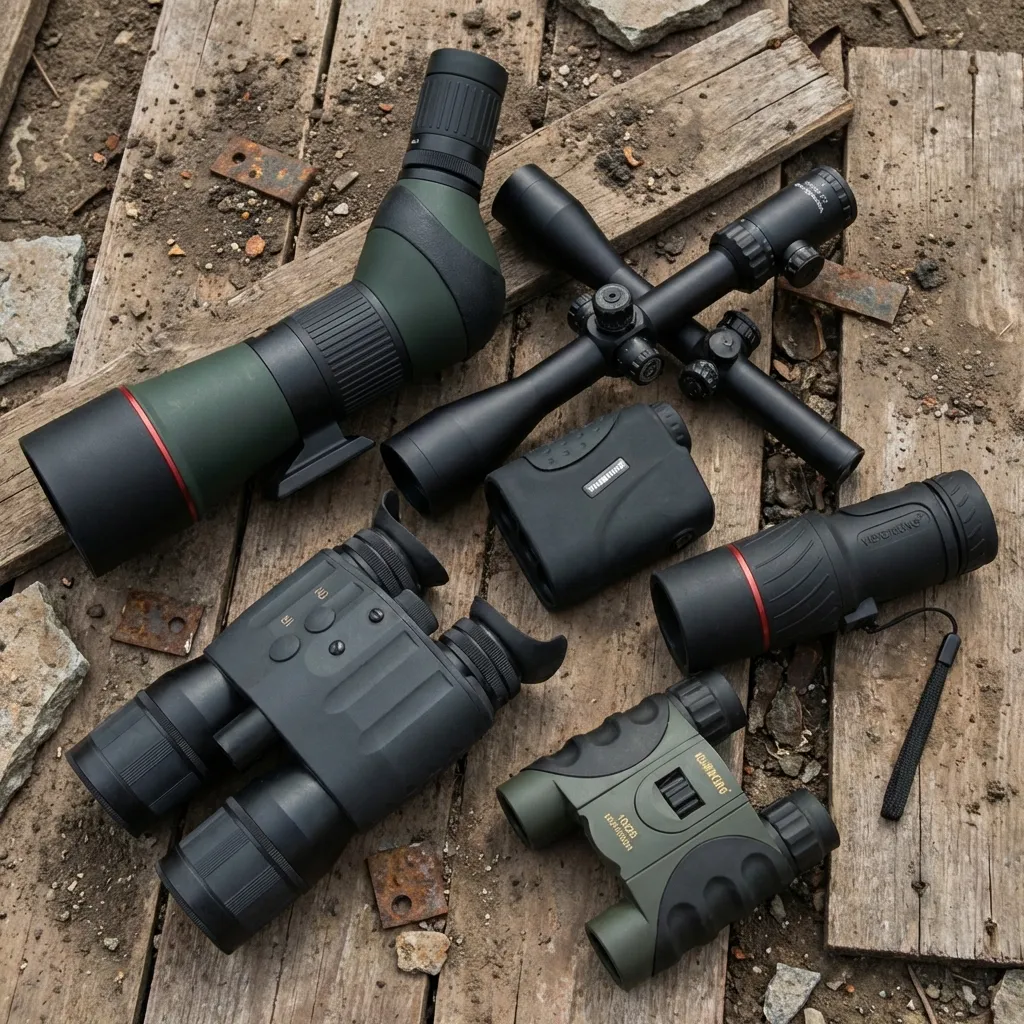
If a long range rifle scope feels suspiciously light, it likely cuts corners with internal materials that will wear down over time. I always advise shooters to accept the extra ounces. When you are hauling gear to the firing line, including your rifle and a high-performance Visionking 25-75×70 MAK waterproof spotting scope, weight adds up, but that extra mass in your rifle scope ensures your zero stays put after hundreds of dial adjustments.
Aircraft-Grade Aluminum Construction
The chassis of a reliable long distance rifle scope is almost exclusively built from a single piece of aircraft-grade aluminum (usually 6061-T6 or stronger). This material offers the perfect balance of strength and weight management.
- Rigidity: A single-piece tube prevents alignment issues between the ocular and objective bells.
- Rohrdurchmesser: Whether you choose a 30mm vs 34mm tube, the wall thickness of the aluminum is critical for resisting crushing forces from scope rings.
- Schutz: cURL Too many subrequests. glass clarity cURL Too many subrequests.
cURL Too many subrequests.
cURL Too many subrequests. long range rifle scope cURL Too many subrequests.
cURL Too many subrequests.
cURL Too many subrequests.
- cURL Too many subrequests. cURL Too many subrequests.
- Wasserfest: cURL Too many subrequests.
- cURL Too many subrequests. cURL Too many subrequests.
cURL Too many subrequests. ED glass cURL Too many subrequests.
cURL Too many subrequests.
cURL Too many subrequests. long range rifle scope. cURL Too many subrequests. turret tracking accuracy or glass clarity cURL Too many subrequests. cURL Too many subrequests. cURL Too many subrequests.
cURL Too many subrequests.
cURL Too many subrequests. ED Glass, cURL Too many subrequests. Parallaxeinstellung cURL Too many subrequests. long distance rifle scope cURL Too many subrequests.
cURL Too many subrequests.
- cURL Too many subrequests. cURL Too many subrequests.
- cURL Too many subrequests. cURL Too many subrequests. cURL Too many subrequests. cURL Too many subrequests. best long range rifle scope cURL Too many subrequests.
- Konsistenz: cURL Too many subrequests. cURL Too many subrequests. cURL Too many subrequests.
cURL Too many subrequests. cURL Too many subrequests. cURL Too many subrequests. besten Gewehrglases cURL Too many subrequests.
cURL Too many subrequests.
cURL Too many subrequests. long range rifle scope cURL Too many subrequests.
cURL Too many subrequests.
While you can shoot long distances with a Second Focal Plane (SFP) optic, a First Focal Plane (FFP) scope is widely considered the standard for 1000-yard shooting. In an FFP system, the reticle grows and shrinks with your magnification. This means your holdover points for windage and elevation are accurate at beliebiger magnification level, not just the maximum setting.
If you are shooting in dynamic environments like the cURL Too many subrequests. where you might need to dial back magnification to find a target, FFP is essential. However, if you are strictly bench shooting at a known distance with max zoom, SFP can still work. For a deeper dive into selecting the right specifications for your needs, check out our guide on custom rifle scope features.
How much elevation travel do I need for long-range shooting?
The amount of elevation travel required depends heavily on your caliber and how far you intend to shoot. As a general rule for reaching 1000 yards with standard cartridges like .308 Winchester or 6.5 Creedmoor, you need a scope with significant internal adjustment.
- Tube Size Matters: Look for 30mm or 34mm tubes, which physically allow for more internal movement of the erector system compared to 1-inch tubes.
- Minimum Travel: Aim for a scope that offers at least 60 to 70 MOA (approx. 18-20 MILs) of total elevation travel.
- Canted Rails: You will likely need a 20 MOA rail base to utilize the full range of the scope\’s elevation.
What is the difference between MIL and MOA?
This is the classic debate in the shooting world. Neither is inherently more accurate; they are just different units of angular measurement.
- MOA (Minutenwinkel): 1 MOA is approximately 1.047 inches at 100 yards. Most shooters round this to 1 inch. Adjustments are usually in 1/4 MOA clicks. This allows for very fine tuning.
- MIL (Milliradian): 1 MIL is 10 centimeters at 100 meters (or 3.6 inches at 100 yards). Adjustments are typically 0.1 MIL clicks.
MIL is currently the dominant choice for tactical and competitive shooting because the base-10 math is faster to calculate on the fly. MOA remains popular in the US for hunting and benchrest shooting. The most important rule is to ensure your turret clicks match your reticle (MIL/MIL or MOA/MOA) to avoid confusion when you sight in a rifle scope.
Do I need ED glass for long range shooting?
Wenn Sie nach dem suchen best long range rifle scope, ED (Extra-low Dispersion) glass is a game-changer. At high magnification (20x and above), standard glass often suffers from chromatic aberration, which looks like purple or yellow fringing around the edges of your target.
Glass clarity is critical when trying to spot bullet impacts on steel or read mirage at 1000 yards. ED glass sharpens the image, increases contrast, and improves light transmission, allowing you to see details that get washed out in cheaper optics. While not strictly mandatory to pull the trigger, it significantly reduces eye fatigue and improves hit probability.